Dress Down Rowley

What is happening to my Prime Minister? What was his inspiration to be casually dressed at the closing ceremony of the inaugural Canada-CARICOM Summit.  A photograph from the closing ceremony showed Canada’s Prime Minister, Justin Trudeau, and Guyana’s President and Dr. Irfaan impeccably dressed while my Prime Minister wore a casual jersey paired with a hooded sweater.

This visual contrast raised the question: Is my Prime Minister truly engaged on behalf of my country? How does he think the world will assess the quality of our nation’s global representation?  Some may interpret his choice as an attempt to connect with everyday citizens and I respect that perspective. But I felt ashamed.
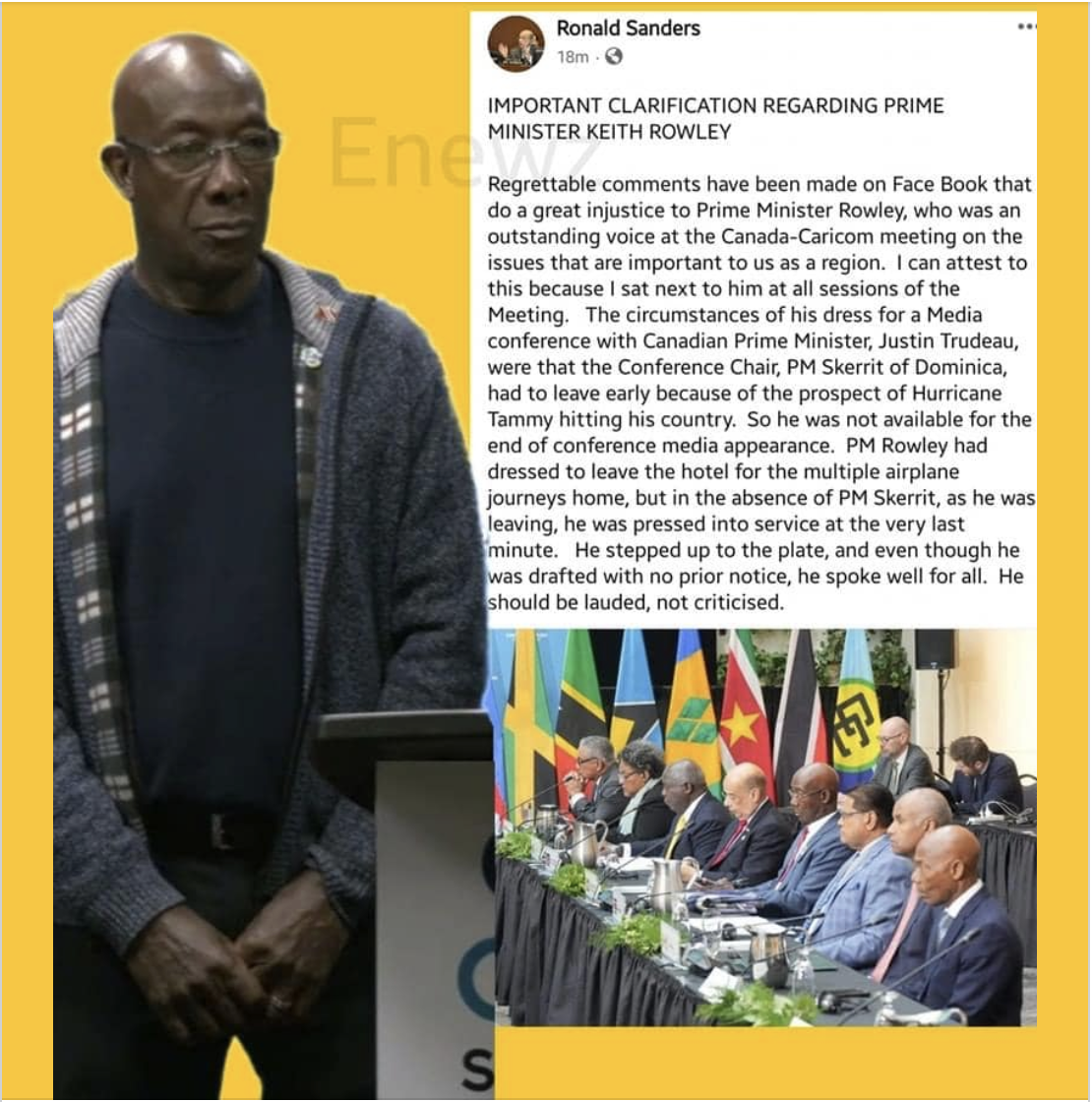
There might be a valid explanation for this nonconformity, such as the unfortunate scenario of his luggage being misplaced or failing to arrive with him. Although the chances of the Prime Minister’s luggage not arriving in a foreign country are slim, such an event would warrant investigating potential lapses in responsibility, and somebody should be fired.

Even in the event of his luggage not arriving, his accompanying team should have the capacity to swiftly visit a shopping mall to acquire suitable clothing.

An alternative rationale for his choice of attire could be a scheduling mishap. Perhaps, while on the golf course, an unforeseen urgency arose, requiring an immediate meeting with the Canadian Prime Minister. In his haste to return to his lodgings, he may have been unable to locate his formal attire, leading him to represent our nation in casual wear. Nonetheless, this possible explanation is my imagination overworking because conference agendas are typically well-prepared in advance.

A third possible reason for his relaxed appearance could be a deliberate attempt to convey a message that the world should transition away from formality in favor of more informal and friendly interactions. I hope that his departure from traditional attire will not be misconstrued as a breach of protocol and diplomatic norms.

Regardless of the reasons behind my Prime Minister’s seemingly unconventional attire in representing our nation, I extend my empathy and understanding. This incident offers us another opportunity for introspection as a nation. As the next election approaches, we should make decisions to ensure our country’s global representation meets the highest standards.
What is our sustainability strategy?

Whenever I visit developed nations, I can’t help but reflect on the beauty of Trinidad and Tobago (T&T) and feel a profound sadness about our limited focus on sustainability. In developed countries, sustainability initiatives are conspicuous, ranging from immaculate streets to responsible waste management and eco-friendly practices. Without transformative changes, our islands’ natural beauty will continue to wane.

One of the most evident indicators of sustainability in developed nations is the cleanliness of their streets and public spaces. The absence of litter and debris reflects not only a dedication to maintaining a clean and healthy environment but also the effectiveness of education systems in raising awareness about the perils of poor hygiene. The simple presence of strategically located garbage and recycling bins that are routinely emptied encourages citizens to dispose of waste responsibly.

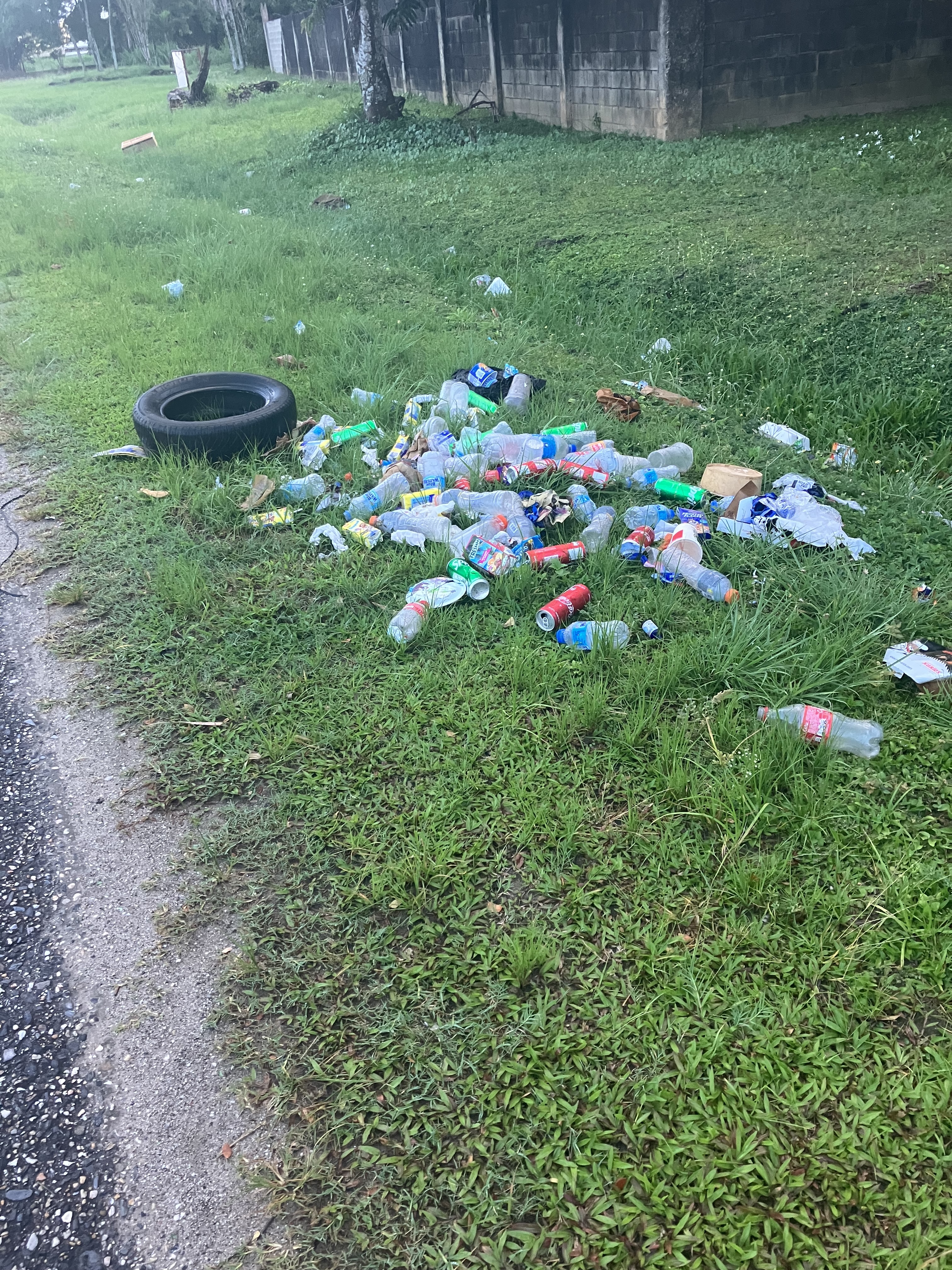
Plastics on the Diego Martin Highway

In stark contrast, many parts of our country lack recycling bins, and recycling’s importance is frequently underestimated or even dismissed as an unnecessary burden. To compound matters, our largest supermarket chain recently terminated plastic bottle collection sites in their stores.

Another stark contrast in sustainability is the use of plastic bags. In developed nations, single-use plastic bags are a rare sight, while our nation grapples with excessive plastic bag usage, which not only contaminates the environment but also poses grave threats to wildlife and our marine ecosystems. It is high time we acknowledge the dire consequences of such practices and take action to reduce our reliance on disposable plastics.

The gap between our nation and the developed world in terms of sustainability is a cause for concern, necessitating immediate action. Achievable goals such as clean streets, responsible waste management, and reduced plastic use lie before us. The key lies in adopting a clear sense of purpose and understanding the consequences of our actions. Until our leadership wholeheartedly commits to making sustainability accessible and transparent, we will continue to confront challenges where rules are flouted, and substantive progress remains elusive. The time has come for a comprehensive reset, a journey toward a more sustainable and responsible future for our beloved nation. However, a transformative shift will not materialize under what can only be described as ‘Ketchup and Mustard leadership.’