Transforming Leadership must include Women

Member of Parliament (MP) Rushton Paray … How dare you create a transformation team without women?  In a recent newspaper photograph capturing you surrounded by a team of 10 men, I was shocked by the absence of women. You are likely to say that they are in the background and my response would still be that that is unacceptable.  For you to transform the UNC, women must play a critical role in the leadership and decision-making processes.  How can you succeed in challenging a woman when you don’t have women at your side?
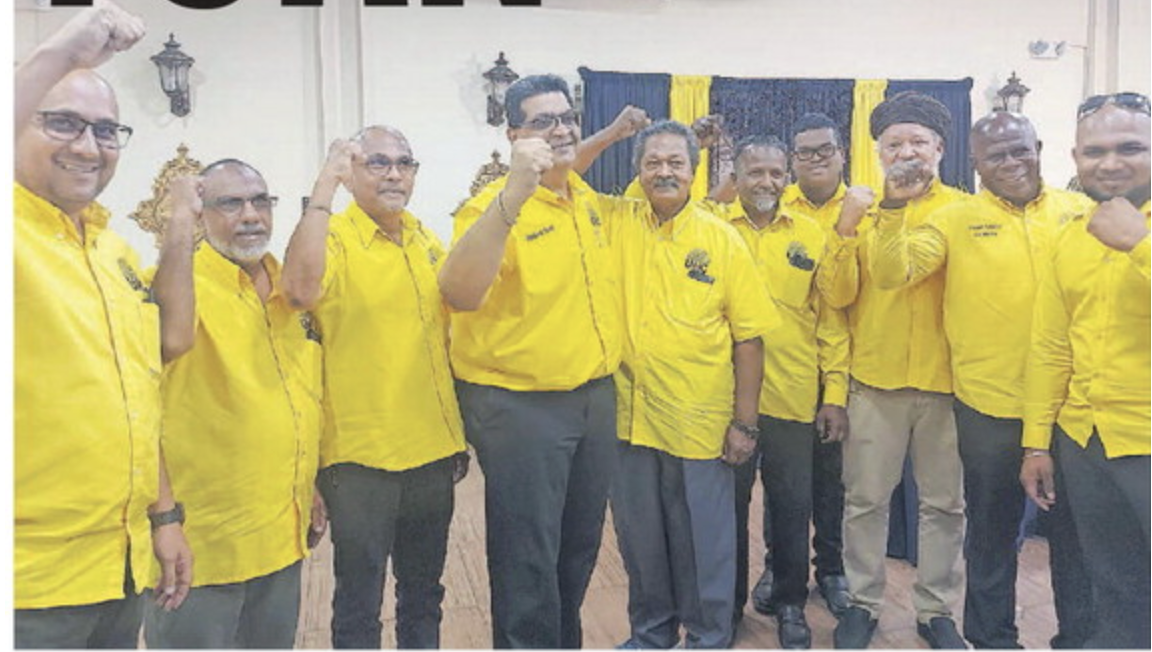
TEAM PARAY: MP for Mayaro Rushton Paray, fourth from left, stands with his team during yesterday’s news conference at the Couva Chamber of Commerce Hall.
-Photo: SHIVANA LAL (March 23, 2023)

I respect your suicidal attempt to ensure that democratic principles are upheld by ensuring that the internal election process precedes the 2025 general elections. I admire your attempt to force the internal elections.  You scored 100 percent in my mind, but this glaring lack of female representation brought you down to zero and I am not suggesting that you include women because they are women.  More than 60% of UWI’s graduates over the past 20 years have been women. Why haven’t you found women to join your leadership team?

Your action highlights broader societal issues regarding gender equality. The absence of women in such a crucial setting speaks volumes about prevailing attitudes toward diversity, equity, and inclusion (DEI). It underscores the urgent need for systemic change to ensure equal opportunities for all.

MP Paray’s scenario reflects a larger pattern of gender disparity, echoed in many sectors of society, including politics. Despite women constituting 30% of Parliament, their underrepresentation persists, hindering the full spectrum of perspectives needed for effective governance.  Just to restate, this is NOT a call for women from a gender perspective, it is a call for bringing more competent, qualified women to the table. 

The question arises: Why should women be included in decision-making processes? The answer lies in the inherent value of diversity. Including women brings a wealth of diverse experiences, perspectives, and insights to the table. It enriches the decision-making process, fostering creativity, innovation, and better problem-solving. Moreover, it enhances legitimacy and ensures that policies reflect the needs and interests of all members of society.

Photo by RDNE Stock project on Pexels.com

What outcomes can we expect from women in leadership roles? Research consistently demonstrates the positive impact of gender-diverse leadership on organizational performance. Companies with diverse leadership teams tend to be more innovative, financially successful, and resilient to change. Women leaders often bring distinct leadership styles characterized by empathy, collaboration, and inclusivity, fostering healthier work environments and stronger team cohesion.

Transforming our country requires embracing diversity, equity, and inclusion at all levels of society. DEI is not merely a moral imperative; it is essential for driving social progress, economic growth, and sustainable development. By harnessing the full potential of diverse talents and perspectives, we can address complex challenges, promote social cohesion, and build a more equitable and prosperous future for all.

Transforming our country also requires women to take responsibility and show up wherever they can to make a difference.  While we expect persons in positions of power to embrace diversity, equity, and inclusion, women also have a great responsibility to become strategically involved in the transformation of our society for all of us to thrive.

Should we celebrate World Happiness Day?


March 20th marks World Happiness Day! Despite our challenges like high crime, water shortages, and poor transportation, can Trinidad and Tobago (T&T) join the global celebration?

The theme for World Happiness Day 2024, “Reconnecting for Happiness: Building Resilient Communities,” reminds us of our duty to make our communities stronger and happier.

With political disconnect and broken systems, we must consider: How can we stay strong when basic infrastructural support, is scarce? What can we do when those whom we have appointed as administrators, and paid beyond the dreams of many in our society, fail us repeatedly over multiple decades and show zero remorse? Worse, they often treat our valid requests with disdain, forgetting that they are our employees.

There is no other option than to join the celebration and be happy. After all, the majority of those who vote seem to be willing to accept the remarkably low level of governance we have been experiencing for the majority of the time since 1962.

Collectively we must face the tough issues shaping our lives (since we have allowed it to happen) and find, recognize, and augment the strength of our people. Despite tough times and previous and current disastrous leadership, we have managed to survive and some even thrive, all without rioting. It has been said that it’s possible that some of our best minds have ended up sweeping streets, or getting into criminal activities, while some of our worst minds appear to be succeeding.

There is no easy fix to our current state of discomfort, distress, and poor systems.  The transformative change needed will require leadership that is strong and willing to make tough decisions and live with the consequences. We have seen little or no evidence of such leadership in many years.

We need leadership that is above reproach and will do the right things because it is the right thing to do and not for votes or kickbacks or for personal gain. Our focus must be on people development and not simply on constructing new buildings.  Our focus must be on improving the systems, structures, and processes.  Our civic employees (politicians) must take World Happiness Day into consideration and focus on building resilient communities if we are to reconnect for happiness.

Fundamentally, the journey to resilience and happiness starts with reconnecting—with our country, our families, and our communities. We must transcend our traditional conditioning to discover and realise that we all have something to contribute (and be willing to recognise that others can contribute, even if we disagree with them) then commit to making positive changes wherever we can.

As we celebrate World Happiness Day, let’s answer the UN’s call and work together for joy and resilience. No matter our age, gender, or background, let’s build a happier, stronger T&T based on empathy and teamwork. It is our resilience that gives us hope for finding happiness and creating communities that can weather any storm.

Address property tax concerns with empathy

Are citizens being heard on property tax issues? A recent statement from the Prime Minister sparked doubt, leaving many wondering about the fairness of property tax implementation in Trinidad and Tobago. One newspaper reported that the Prime Minister said: “The vast majority of people loudly protesting against property tax are people who have property outside of Trinidad and Tobago”. This sweeping statement lacks evidence, leaving citizens questioning its validity and fairness.

For example, a retiree friend got a document about their property’s value, causing them immediate stress about paying taxes with their fixed pension income. This confusion is common; many others misunderstand and discuss selling their property to cover taxes.

The government needs to reassure citizens about the safety of property ownership and explain the fairness of property values to avoid further confusion.

The government must reassure people that their property ownership is safe before tax implementation. They must also clearly explain that property values are fair and will not harm future generations’ inheritance.

The lengthy estate settlement process compounds worries about property tax implications for future generations

Overall, property tax is adding significant stress and financial strain, particularly for the elderly population. While property tax has benefits, the Government should address concerns about fair property values instead of ignoring them.

Ignoring our concerns reinforces the view that the Government is acting like a dictatorship and not listening to its people. This situation reflects a missed opportunity for empathetic and collaborative governance.

This situation reflects a missed opportunity for empathetic and collaborative governance. Actions speak louder than words, and our leaders’ preference for a command and control approach mirrors criminals’ tactics. It is a stark reminder of the need for leadership that prioritizes empathy, collaboration, and transparency in addressing citizens’ concerns.

Condemning Trinibad ignores broader injustice

The echoes of colonial suppression resonate in the current debate over how to change the language of Trinibad music.

This move towards condemning and/or censoring mirrors the tactics employed by our former colonial rulers, stifling artistic expression under the guise of societal order. Genres like rap, hip-hop, and reggae have all faced similar censorship, yet they have endured as powerful forms of resistance and cultural expression.

While proponents of some form of condemning argue that it is necessary to curb violent behaviour, research suggests the root causes of violence lie deeper within our social structures.

The aggressive and misogynistic rhetoric of our leaders reflects a troubling attitude toward our citizens, but outlawing Trinibad music fails to address these underlying issues.

It is essentially sweeping the dust under the carpet so that everything appears clean so long as the dust under the carpet doesn’t grow into large piles.

The Trinibad genre, like other art forms, is the canary in the coal mine that is our society, letting us know there is flammable gas gathering, and we have to be careful not to cause any sparks.

Studies indicate the environment in which individuals grow up-including their homes, schools, neighbourhoods, and interactions with law enforcement-plays a pivotal role in shaping behaviour. Simply condemning a musical genre overlooks the systemic injustices that perpetuate violence and inequality.

If someone is injured, they cry out. Telling them to be silent so that we can be comfortable is a cruel and potentially dangerous thing to do. The cry of pain will emerge in some other form; history has shown us this repeatedly.

Instead of replicating the tactics of our colonial oppressors, we must strive towards a more collaborative and inclusive approach. This requires a shift away from autocratic leadership towards accountability, dialogue, and, more importantly, curative action.

We need to remember the language used by leadership is a powerful tool that can shape attitudes, behaviours, and perceptions within society. Leaders have a responsibility to use their words wisely and responsibly.

Consider, if you will, the language of our prime minister regarding women. He used the term ‘jammetry’; he said ‘a woman must be groomed like a golf course’ and suggested that to avoid violence, women must ‘choose your men wisely’.

As we approach another celebration of International Women’s Day, I hope our leaders who are our role models will embrace the theme of ‘Inspire Inclusion’ and move away from the autocratic style of leadership that now prevails, and include and engage more women in the decision-making process. If we foster a culture of respect, empathy, and inclusivity, all genders and all creatives will help create a more harmonious and equitable society.