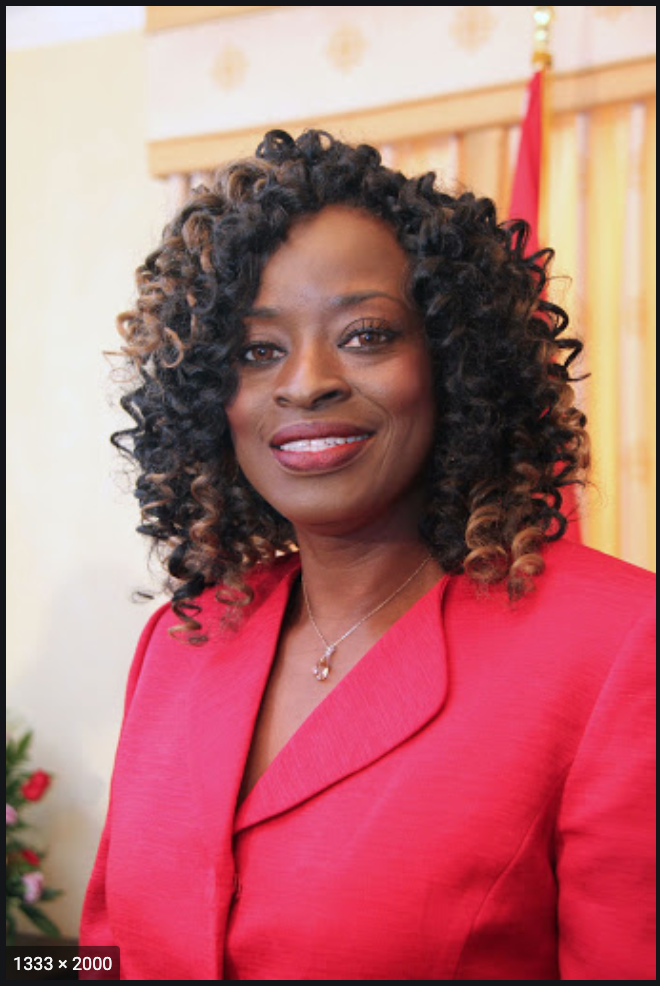
Minister of Communication Donna Cox delivered a masterful stroke when she responded to Media inquiries about her health. In less than 30 seconds, she was concise, clear, complete and achieved the objective of closing the communications loop. Her response shut down any thoughts or attempts to explore the matter any further. Well done Minister Cox!
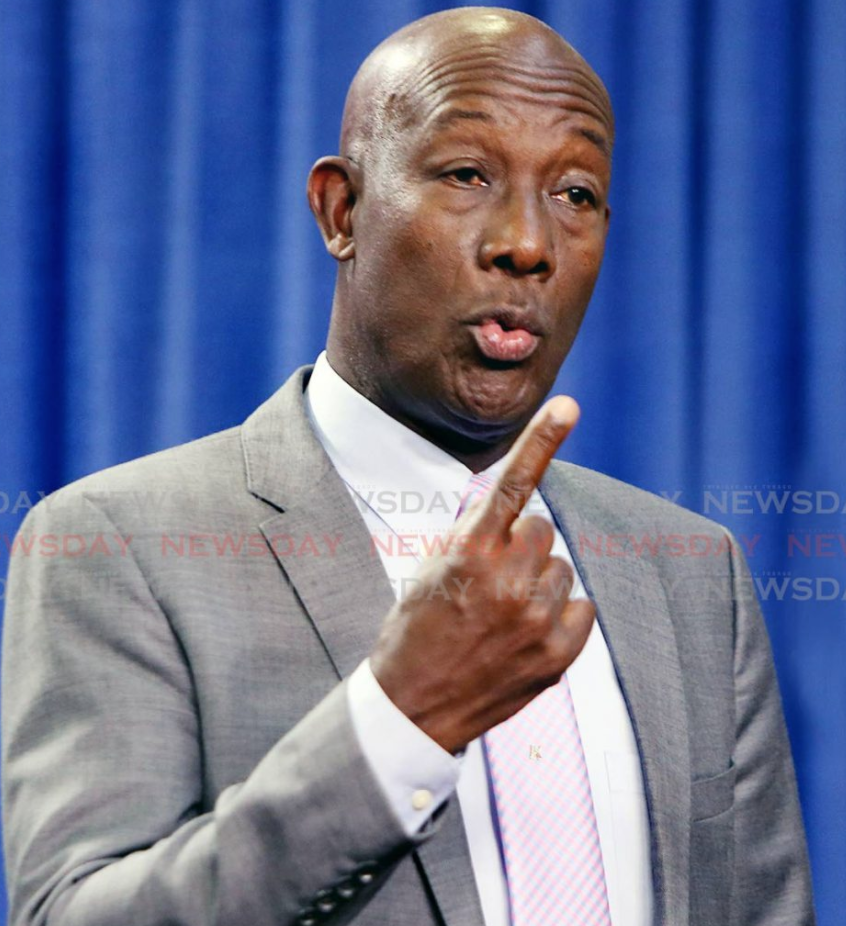
As a communications exercise, contrast such mastery with the Prime Minister’s facebook rant about head of the Chamber of Commerce Gabriel Faria and you see an attack on someone in a position of leadership who is simply speaking his truth about the business community and the government’s lack of action. Faria has consistently spoken and written about outstanding VAT and how it negatively impacts the business community. The Prime Minister’s “Trumpian” rant reminded me of the “bullishness” he was accused of by the late former Prime Minister, Mr. Patrick Manning.
Let’s examine this rant based on the rules of communication. In one concise missive he accused the Chamber head of: trying to influence voters; being very disrespectful to the country’s leadership; disdainful of all the people who offer themselves for office and having a disrespectful mouth. It was concise. On the rule of clarity, the reader is left wondering about what caused this! What was motivating the Prime Minister? On the rule of completeness, the rant is incomplete. I have to concede that he may have achieved his objective but that was not apparent.
The Prime Minister would do well to embrace the counsel of his Minister of Communications while pausing any inclinations to revive the “raging bull, wagang or rottweiler” behaviors of which he has been rightfully accused in the past.
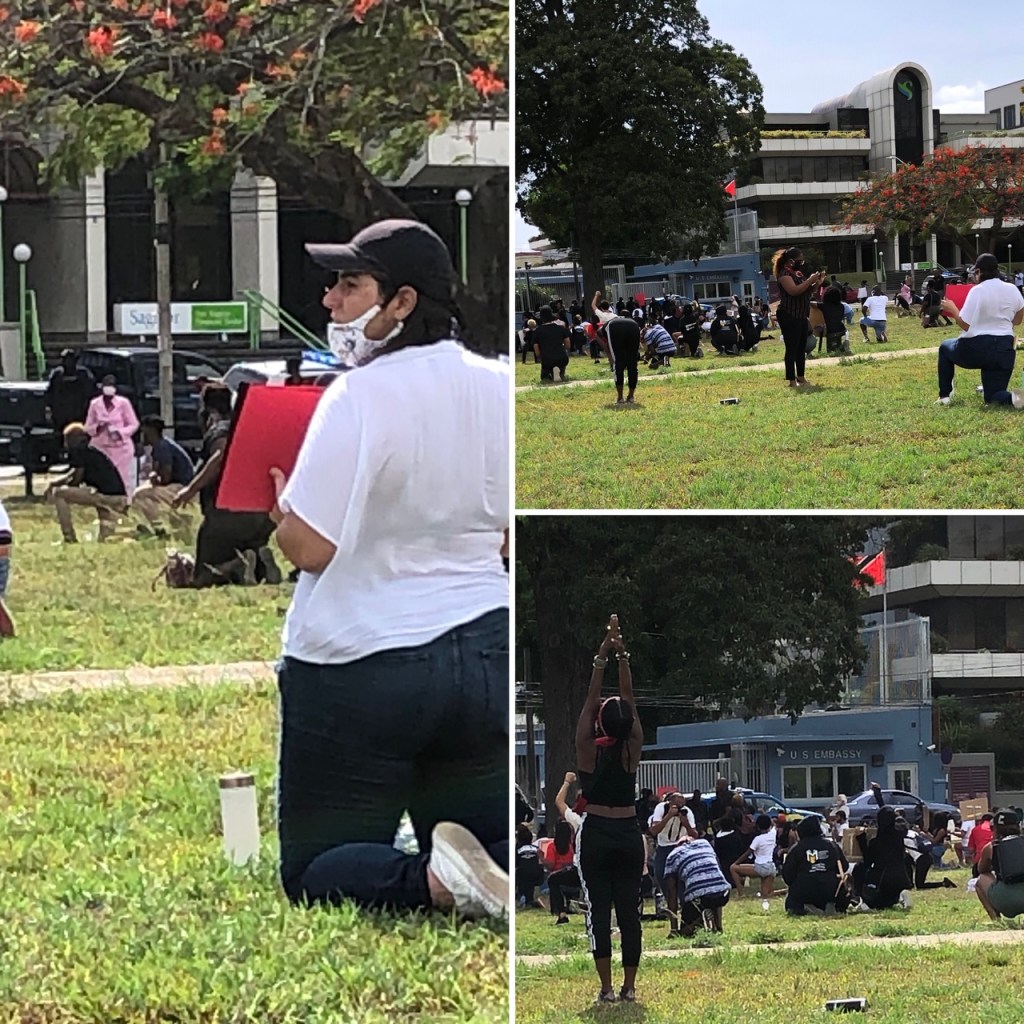
When the crowd took a knee and held it in silence for 9 minutes I knew I was amidst a sea of young persons who were sending a message that the time for change is now. The #ttblm movement gathered peacefully in the Queens Park Savannah, chanted and spoke their truth. For 3 ½ hours the young campaigners shared stories with the crowd and in the background drivers popped their horns in solidarity as they drove past the US Embassy.
I have nothing but admiration for these young people who dared to uncover the pus-filled lesion which their parents and grandparents have plastered over for many years. Looking around the crowd the variation in the hue of the campaigners gave me a peek into what the future of Trinidad and Tobago will look like.
As an older person, I felt proud of their bravery. The only low point to the demonstration was the absolute show of force by the TTPS who lined the pavement opposite the US Embassy with their guns and horses on display clearly intending to show off their power. One cannot help but feel intimidated in the presence of such a show of weapons. This was aggravated by the “gayelle styled” movie crew who began videotaping the crowd. The Speaker on the megahorn asked the videographers to stop but this request was ignored. The videotaping continued albeit appearing to take low shots so that faces may not have been identified. There was no attempt to de-escalate the situation. As a matter of fact, I felt that actions of the TTPS were unfortunate and could have infuriated the crowd. The presence of the Commissioner of Police made no difference.
I have learned from other situations that protests and demonstrations can be quickly become volatile. I commend the young people for their exemplary behaviour and hope that in the future, the TTPS will respect their wishes not to be documented and dial back on this need to show force. Peace and non-violence were recurrent themes of the demonstration and every effort should be made to keep it peaceful. I noted that not one piece of garbage was left in the area. Our future is looking bright.
Years ago, one of my mentors advised me that as a then public relations professional, I could not separate my private life from my public persona—so I had to be on my guard at all times.
There is timeless value in this advice and it is even more important as we live our lives under the microscope of social media in a deeply divided small state. The recent post by head of corporate communications at taxpayer-owned Caribbean Airlines Ltd (CAL) was unfortunate and unnecessary.
Photo: CAL head of corporate communications Dionne Ligoure.
Professionals know that actions on Facebook often end up in traditional media, so they must be wary of what is intended for public consumption. It is reported that Miss Dionne Ligoure said: “it will be unpretty when I start to pelt out facts and quote some of yuh high ranking officials…”
She is now reminded that approximately 350,000 taxpayers who contribute to her salary voted for the UNC, and, like the PNM supporters, there is an expectation of neutrality.
This expectation of political neutrality for public servants and persons employed in publicly-funded organisations is a long-standing tradition. In one action, Ligoure has brought attention to a deep flaw in our political system, which is the reality that some people believe that when their party is in charge they can do anything without consequences.
We have become accustomed to party supporters being appointed to boards but some of us still hope that executives and employees find their way into state corporations based on merit, and that they keep their jobs based on performance.
The reality though is that the long arms of politics reach into the bowels of organisations, resulting in some employees feeling the need to spout their partisan support for the world to know. Had this exact situation occurred in the private sector, I assure you that she would have had to explain herself to her supervisor—as former employee of US firm Franklin Templeton Amy Cooper found out, though not for political reasons.
Photo: Amy Cooper was fired by investment management company, Franklin Templeton, after filing a false police report against a black man, Christian Cooper (no relation).
Spouting your political views on your personal page is neither a smart nor strategic move. Bosses and others take note and wait for the opportunity to use your statements against you. They apply labels which are hard if not impossible to remove. They may even actively prevent you from benefiting from certain opportunities.
Carrying the title ‘head of corporate communications’ has tremendous responsibility. The incumbent plays a key role in shaping the perception of the company in the minds of shareholders, employees, customers and the general public. The reporting relationship is often to the Chief Executive Officer and the Board of Directors.
The communications professional is expected to help the company craft key messages and keep on the cutting edge of the field. These are not responsibilities to be taken lightly. They are also responsible for building customer loyalty, growing brand awareness and engaging stakeholders at different levels.
In one rant on social media, Ligoure has diminished her role and reputation amongst a large section of the population. She will be labelled as anti-UNC with an agenda to use information attained through her formal role to throw shade or even cause reputational damage to unsuspecting citizens.
Communications professionals develop trusting relationships with their stakeholders to foster mutual understanding—to act otherwise is to destroy countless years of hard work by persons who have gone before.
Minister Young’s inability to play with a straight bat inflicted upon the country a level of discomfort as we contemplate the real reason for US naval presence in the region while it is reported that there are oil tankers on their way to Venezuela. In the absence of a clear statement by Minister Young or the Prime Minister, the population is left to continue the speculation about the relationship between the visit by Venezuelan delegation, the alleged sale of fuel by Paria Trading, the alleged denial by Aruba that they had any dealings with Paria Trading and the Prime Minister’s denial of any knowledge of who was in the delegation.
If Prime Minister Rowley could replay the entire match and examine each stroke, he would see the obvious missteps which brought him to this state of play. Firstly, he would see that the attempt to put spin on the Venezuela issue was ill advised and akin to using a brash 20/20 shot when he should be continuing to build a solid test match innings. Secondly he would see that in this version of the game, openness and transparency would have won him greater support than the current unrelenting pressure to find out what was the real reason for the visit by the Venezuelan delegation.
We have drifted away from the classic form of cricket and have embraced a defiled version in which the rules are changed and twisted on the altar of expediency. The “concrete stand” is filled with children who are learning this new form of the game and are waiting to execute their version with precision. There is a need for some intervention to teach them that the game is a noble one for gentlepeople to play by the rules and those rules are applicable to daily living.
As this series ends and the captains prepare to take a fresh guard, I am hoping for a return to something nearer the classic form of the game where we display patience, sportsmanship, consideration for others, honesty, integrity, transparency and a host of other leadership characteristics which make a positive difference to our lives.
“What is your miracle wish for WASA?” I once asked a former Water and Sewerage Authority (WASA) CEO.
“To convert my consumers into customers,” was the response.
More than 15 years later, another well-wisher bites the dust because of his desire to do the same thing. Both instances occurred under PNM administrations.
Photo: Water, water, water… (Copyright RD.com)
The fired CEO explained to me that there was a difference between a consumer and a customer. He said that a consumer can enjoy the use of a product or service but a customer must pay for that product or service in order to enjoy its use.
He explained there were just too many consumers and not enough customers paying for water. Things have changed at WASA and today many more persons will be described as customers, but the problem remains that there is a significant gap between the price we pay for water and the cost of providing the service.
Metering is the sensible business solution but that’s not going to happen before the next general elections and will be abandoned as some other administration’s problem.
If I accept the contents of former minister Robert Le Hunte’s resignation at face value, then he was on to a good thing for our country.
The message that the freeness must end will not be communicated by pleas and chats without firm action. For example, our level of compliance with Covid-19 rules increased when the enforcement became evident.
The alleged reference by the prime minister to the cost of water as the reason for water riots of 1903 is not the whole story.
Photo: Prime Minister Dr Keith Rowley gestures to supporters at Balisier House after the election results on 7 September 2015. (Courtesy Allan V Crane/Wired868)
A manuscript by KO Laurence titled ‘The Trinidad Water Riot of 1903—Reflections of an Eyewitness’ states that “the immediate cause of the Water Riot was the introduction into the Legislative Council of a new Waterworks Ordinance which was the focus of violent agitations. That agitation can only be explained in terms of a long history of dissatisfaction with the city’s water supply.”
So our dissatisfaction with an unreliable water supply is a historical problem of over 100 years, and which must be solved.
In my own lifetime, I have followed the accusations time and time again that successive governments have redirected water to favoured locations at the expense of others. ‘Water is Life’, as one of the previous WASA slogans stated goes beyond sloganeering. Wilfully denying people access to water is inhumane, unproductive and scandalous.
If, as his letter says, the goodly minister of public utilities had been working with the Inter American Development Bank (IDB) and the Ministry to implement the metering project, then we have lost an opportunity to fix a highly politicised institution, which masquerades under the guise of a public utility providing an essential service.
Imagine the transformation opportunity which could have resulted from current WASA workers coming together around the goal of metering by 2022 or whatever date. Here was an opportunity for the approximately 5,000 workers to embark on a mission critical to the country and their own households.
Photo: Former Minister of Public Utilities Robert Le Hunte.
It is a chicken and egg argument to suggest that we cannot meter until we have an assured supply. The only way for our country to develop is for us to delink the politics from our development. Here was an opportunity to change our mindset by changing the structures and systems around accessing water.
I am a firm believer that people will not change their behaviour unless they understand the pain or pleasure their actions will bring.
When Le Hunte joined the Cabinet, there was disquiet due to the apparent lack of knowledge about his Ghanian citizenship; but that quickly faded as he demonstrated comfort with his office. He even won over some citizens when he communicated a data-driven approach to reducing leaks in WASA’s pipeline infrastructure and demonstrated a willingness for respectful engagement via media appearances.
Fare thee well, former minister. Our politicians are just not ready to take the painful actions which will brighten our future!
Meanwhile I recall the words of both Dr Mighty Sparrow, renowned calypsonian, and Dr Terrence Farrell, former chairman of the Economic Development Advisory Board (EDAB): “We like it so!
Methinks thou doth protest too much! Three reasons to doubt Venezuela explanations …
After managing the Covid-19 pandemic so well, why did Prime Minister Dr Keith Rowley score this own goal with the high-power Venezuela meeting?
His team was doing well. Couldn’t his handlers advise him to duck this one and move on to the good news of opening up the country?
Photo: Prime Minister Dr Keith Rowley. (via Office of the Prime Minister)
Instead, thinking people are now doubting the veracity of his statements—and in particular when it is coupled with anticlimactic Cambridge Analytica closure. Here are three reasons why some of us think that his loud protestation might mean there may be more in the mortar than the pestle.
The first reason for suspicion is because no plane can land here without a detailed manifest and an equally detailed declaration of the weapons on board. The vice-president of Venezuela is unlikely to be arriving on a plane without her bodyguards and their arms and ammunition.
Ask anyone who worked on the Summit of the Americas and Commonwealth Heads of Government Meeting (CHOGUM), they will tell you that even the entourage of the United States president had to get clearance for firearms to enter the country. Such clearance is provided by the minister of national security, especially in a time when your borders are closed. Saying that that is the job of the technocrats is true but does not absolve you from ultimate responsibility.
People in the aviation business also tell you that even when aircrafts fly over another country’s airspace, they need to provide information about the type of aircraft, number of passengers, plane tail number, names of all souls on board and final destination. If for some reason Trinidad and Tobago waived these requirements, then a diplomatic permit would have been issued and again the Prime Minister would have known.
My second cause for suspicion is the composition of the delegation. It is reported that the reason for the visit was to discuss Covid-19 but on our side we do not see the presence of either the minister of health or the chief medical officer while on the Venezuelan side, there were energy officials.
Photo: PDVSA president Asdrubal Chavez. (via The Week)
It is possible for persons to have double competencies but I would be suspicious of such a mixture.
My third reason for doubt is the level of aggression which is being exhibited—though I must admit that the drama in Parliament was entertaining. The US did not need the leader of the opposition or her colleague to bring this matter to their attention so this is a cheap shot on the part of the opposition.
It is my fervent wish that other issues appear on the horizon and that our country is not penalised for this mis-step.
Additionally, it is necessary to question the role of the Ministry of Foreign Affairs in the imbroglio. Was Minister Moses consulted and what advice did he give with reference to our obligations under the Rio Treaty? Or is it that the role of the Ministry of Foreign Affairs has been so diminished that they are no longer even consulted?
On balance, this is a very unfortunate situation for the Prime Minister and I am reminded of something I read in an e-card: “Funny thing about getting caught in a lie. Everything you ever said becomes questionable.” And I might add, everything you are about to say will also be questioned.
Dreaming of tomorrow, how recovery team can help T&T’s ease of business
There is always a gap between perception and reality. Communicators have to operate within that space trying to narrow the gap and strengthen their intended message.
The government opted to use moral suasion to get citizens to stay at home, but a drive or walk through neighbourhoods, towns and cities gives a perception of non-compliance. People are going about their business as usual.
Photo: A taxi driver in San Fernando waits for passengers during the Covid-19 pandemic in April 2020. (Copyright Ghansham Mohammed/GhanShyam Photography/Wired868)
What else accounts for the number of cars parked around certain establishments? What else accounts for the foot traffic in certain areas?
What we are experiencing is the surreptitious opening of various establishments in order to survive. As a people we have mastered the ‘sneak’, and this will continue until there is serious enforcement of the rules across the board and a reduction in the perception that some are more equal than others.
We are doing well in limiting the spread of Covid-19 by applying sound science while appealing to the non-scientific feature of duty and morality.
This is really an appeal to a deeper sense of responsibility and concern amongst our people forgetting that our dominant behaviour is to ‘fix yuhself first’. Further the systems, structures and process which shape that behaviour have been crumbling. The ‘sneak opening’ is just another way to work around the system.
For us to emerge on the positive side of Covid-19 we need to embark on a massive culture change initiative with buy in at all levels. Even if the prime minister’s ‘dream team of 22’ comes up with a most appealing plan, it will fail unless the people are energised around implementation.
Photo: Prime Minister Dr Keith Rowley (left) at the BPTT Technology opening in 2019. (via OPM)
I note recently the life given to the legendary quotation from management guru Peter Drucker: ‘culture eats strategy for breakfast’. One interpretation of that quotation is that it means how things get done is more important than what is being done.
Our Achilles heel will continue to be the elements which feed into the Ease of Doing Business (EDB) indicator. The Covid-19 recovery strategy must comprehensively tackle those factors, which brought us from number 62 on the EDB list in 2010 to 105 in 2019.
The current prime minister has been in the Parliament for almost half of our period of independence. During his 29 years, he either witnessed or presided over the demise of some of our systems and processes.
He is now in the fortunate position to preside over the re-start of the economy. There are a number of things that are needed and all cannot be achieved, but my wish list comprises three areas of focus: ensure the final assent of the procurement legislation, reduce the number of state enterprises, and provide a laser focus on strengthening the systems, processes and procedures which will help our country move towards the lowest position we ever held on the EDB index.
The crisis of Covid-19 presents an opportunity for us to shape the future society of our dreams but we must listen with our hearts, create and support systems of compliance and provide open and honest feedback to our collaborators.
Most of us have six unique numbers with which we are identified. They are our Board of Inland Revenue and National Insurance Scheme numbers as well as those found on our birth certificate, identification card, driver’s permit and passport.
I posed two questions to my friends in the digital space: Is this desirable; and how difficult is it to collapse these into one?
Photo: Trinidad Newsday journalist Kalifa Clyne hands over her passport. (Copyright Trinidad Newsday)
The unanimous response was multiple numbers is the most inefficient way of keeping track of citizens’ records. Based on a 2014 World Bank Report, 120 of 193 countries implemented a single unique identifier for each citizen from birth.
Imagine if we had such a system. The government would be able to identify the exact number of citizens under the poverty line and be able to provide the support they need in times like this Covid-19 pandemic. It would streamline the distribution of food cards to the needy and provide a history of distribution.
Minister Camille Robinson-Regis commented recently that her ministry will use local government bodies and community-based NGOs to find everyone who needs help. Had there been a system which accounts for each citizen, the Ministry of Social Development would have been able to rely on proper data to find everyone who needs help.
Having a unique identifier for each citizen should provide transparency since it minimises the ability to double dip, undetected, for benefits. Under the current system, we were told of the number of food cards distributed to MPs for their constituents and hopefully there is a system of authentication. But our new normal must be driven by hard data which will minimise the potential for people falling through the cracks.
On the challenge of collapsing those six numbers into one, my digital friends suggested that it is doable and not a very complex activity. They noted that other countries did this over a period of time with a seamless transition.
Photo: Minister Camille Robinson-Regis (centre) during a recycling exercise.
In 2009, the India government engaged in the biggest biometric ID programme in the world when it established the Unique Identification Authority of India to issue unique identification numbers to their citizens.
The sticking point here would be getting clean data from each of our ministries as well as dedication and the will to change the current bureaucratic structures. In other words, understanding the ecosystems within which the work is done and applying the necessary resources to mining the data.
Designing a system for 1.3 million users was equated with designing a system for McDonald’s, which employs 1.7 million persons across more than 100 countries. We need only the political will to move into the 21st century.
This Covid-19 pandemic and the social distancing required forced many companies to implement remote work strategies and prompted the government to hasten certain online transactions and move closer to implementing online education.
The changes made by this pandemic should be maintained with a view to moving Trinidad and Tobago into the digital space and strengthening our systems and processes. My Covid wish is for us to begin the process of collapsing those six unique numbers into one. It will be a giant step towards the modernisation of Trinidad and Tobago.
Photo: Embracing technology.
If we go back to our archaic paper-based systems we would have lost the exciting opportunity which this crisis has given us.
Maybe there is an opportunity here to engage our digital gurus to design the new system as an online challenge.



 Dennise Demming