Less Testosterone needed to solve the Petrotrin Issue!

The Petrotrin story could have had a better outcome if only there was less testosterone being thrown about.   This is clearly a situation of, “I am in charge and I will do what I want.” Considering that you have been a large part of the decision making over the past 20 years and are therefore responsible, do you believe that this how to run a company a (or country) competently?Collaboration Image
The PNM has presided over bad decision making and politicking at Petrotrin for decades, but now the Prime Minister and the Minister of Finance only want to express this situation purely with economics.  The crucial facet being missed by purely economic argument is that this is also a socio-cultural issue and a human development issue. It is about changing the way labour and business interact to produce outcomes, moving from the futility of adversarial stance to a collaborative one.

Once again, the government isis also missing the “boat” by turning its back on an opportunity to be a game-changer.  There could have been two outcomes; first, a message to “John and Kavita Public” that we have to give a fair day’s labour for a fair day’s pay and second, negotiated (ie. mutually agreed) outcomes are more likely to succeed than those which are adversarial.  For either of these outcomes to be achieved, deep dialogue and collaboration would have been required.

The leadership keeps missing the potential demonstration effect that can impact every part of our country.  Instead they choose the worn-out power play informed by “might is right” and the power of the patriarchy. Our country needs to see good minds get together (regardless of gender or socioeconomic status), and have a robust exchange of ideas to emerge with solutions which they all agree to uphold.  If that happens it will signal that we are really “all in this together”.  How can this autocratic display of power be allowed to occur in the lead up to elections? I keep hearing a line from Sparrow’s little ditty – “Who ain’t like it could get the hell out of here”.

The leadership is also missing the “boat” which can signal that there is always a middle ground that could be attained but it requires accountability, collaboration and transparency.  How could you sign a Memorandum of Agreement in April and less than six months later, pretend that it never existed? There was a time when a person’s word was his bond and we had gentlemen’s agreements.  Well, if a written agreement can be broken at this level, then what do you expect from the ordinary citizens? They will behave exactly as the leadership and speak with “forked tongues”.

The anecdotal evidence suggests that this population is waiting and anxious to follow anyone whom they believe will be honest and act in their common interest and not in the interest of certain cliques of people.  What the Prime Minister and his circle should be doing is figuring out how to get Roget and his aggressors to sit around a table and hammer out an agreement. They will all then have the moral authority to tackle WASA, the Police, the Health Sector and anywhere there is public expenditure in the provision of goods and services.

The industrial court has given us an opportunity and it is up to us to grasp it, run with it and be guided by the notions of Accountability, Collaboration and Transparency (ACT).

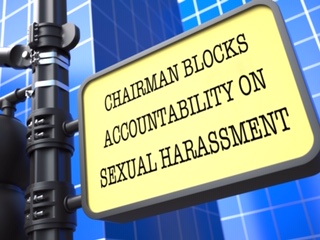
Requiem for Victims of Sexual Harassment

Disaster Concept. Desaster Ahead Roadsign.

You are cordially invited to

The Daily Requiem for all victims of sexual harassment at

Angostura Holdings Limited and indeed throughout Trinidad and Tobago.

The chief celebrant will be

Mr. Terrence Bharath,

Chairman, Angostura Holdings Limited.

In anticipation of his sermon here are two quotes from previous sermons. On July 17th, 2018, his response to my letter said in part:

“In any event, this matter has engaged the attention of the Company, its Attorneys and Board, for a sufficiently long period and the matter is now considered closed”.  Ltr to DDemming 17July2018 SIGNED

His response dated September 18, 2018 said in part:

“Angostura is a company registered under the Companies Act, there are rules and regulations which govern it its operations and dissemination of information. As a member of the Public I’m afraid that you are not entitled to the information which you seek in your letter of 10th September.”  T. Bharath September 18

Here are the questions I posed to the Chief Celebrant:

  1. Is there a sexual harassment policy at Angostura?
  2. When was it implemented?
  3. Was it accompanied by sensitivity/awareness training?
  4. How can a member of the public (an indirect shareholder) access the policy?
  5. What specific actions have the Board taken to ensure that the issue of sexual harassment is ventilated throughout the organization, taking into consideration that sexual harassment is not gender-specific.
  6. What is the clear process for an employee to bring a claim of sexual harassment to the management?

These are simple questions, the provision of whose answers could be easily dispensed with in order to close the matter.

But maybe, just maybe, if he answered the questions, it would be clear that the sexual harassment policy was not implemented until after the claim was made under the Whistle Blower policy. It was a situation of post facto implementation.

Maybe, just maybe, if he answered the questions, it would become obvious that there has been no sensitivity training for employees at Angostura Holdings Limited.

Maybe, just maybe, if he answered the questions, we would realize that the sexual harassment policy is opaque.

Mr. Terrence Bharath was a member of the Board of Directors which presided over three failed attempts to investigate exactly what happened. He is now slapping his female workers in the face by using the Company’s Act as a shield against the legitimate questions and he might be right, but there is a larger dilemma to be considered.

What is the responsibility of companies which are partly owned by the State? Was the Prime Minister not acting on behalf of the people of Trinidad and Tobago when he appointed the Board of Directors? Shouldn’t the tenets of accountability and transparency apply? Don’t we (members of the Public) have a right to be informed of the policies of companies which are partly purchased by our tax dollars?


Petrotrin – A Sociocultural Fiasco …

glass half fullI’m a “glass half full” kind of person, which is why I see the Petrotrin closure as an opportunity for inspired leadership on one hand, and the transformation of our people on the other. Leadership and transformation both require a willingness to change the way we see things. The behaviourists talk about changing our mental models, but before we change those mental models we have to engage in a deep conversation about how and why we need to change. And this is where my “glass half full” notion becomes fragile and even smashes to smithereens. All I see before me is confrontation … one-upmanship … winners [those who think they are] and  losers [many who know they are]. This is too important a decision for fragile egos to prevail. It requires inspirational leadership and communication. Businesses go “belly-up” every day but what makes a difference is the capacity of the people involved to see the opportunity in the crisis, and their willingness to roll around in the mud and come out with clear action plans which will be honoured by gentlemen.

The closure of Petrotrin goes way beyond the disappearance of the flare which has brightened the skyline for more than 75 years. The closure will see the darkening of more than 35 fence line communities which thrived because of the business generated by employees at the Refinery. Gasparillo, Marabella, Plaisance Park, Claxton Bay will change because the refinery no long exists. The delivery of medical services to 20,000 persons annually will also change. The positive outcomes derived from the company’s support for sport and culture will change if not disappear. These are not hard economic arguments but sociocultural considerations.  Indeed; the loss of activity in the area will cause loss of business to the area – from fruit and snack vendors to stores and gas stations – all will be affected. These business owners might go from contributing to the economy, to being a drain on it. The loss of healthcare might financially finish off some families, who also might end up having to rely on government handouts.

From a Leadership viewpoint, we will see the extent to which this Rowley led administration can use this as an opportunity to change governance structures at state enterprises. We will see if there is the capacity to transform the public service. We will see if a model emerges which can make WASA into a productive enterprise. This situation has been played out before – the loss of the sugar cane industry which is thriving in other parts of the world (not just for sugar, but alcohol as fuel and other products).  If none of these happen then it will be fair to conclude that another opportunity for transformation has been squandered and perhaps the leadership capacity just does not exist.

So, the jury will be out for some time with regard to leadership but with regard to communications, the murkiness in the environment confirms to me that it is a textbook example of how “not” to handle communication of a major decision. In today’s mediated communications world, leaders have a responsibility to shape their narrative by telling their story. The story of the closure of the refinery has not been told and if anything has raised a level of mistrust which will take a long time to change.

What we are seeing is an “old power” approach in which the Prime Minister and a select few hoard resources like a dam holding back water, flooding some areas to destruction, while causing drought elsewhere. What is actually needed is a new power approach which is “open, participatory and distributed”, the way rain and rivers distribute water in a forest, so everything grows and thrives. Countries like Qatar, Saudi Arabia and Norway are successfully doing this, so this is not a pie-in-the-sky idea.

The big question remains: Is the T&T leadership grown-up enough to do this, and are the T&T citizens responsible enough to handle the resources?

Ending Sexual Harrasment!

Our institutions are weak and failing daily. Sexual harassment policies are the exception rather than the norm. In developed countries the converse is true. Once again, the state has an opportunity to change this game by implementing sexual harassment policies throughout the Ministries and at all State Enterprises.

This administration led by Dr. Rowley can begin at Angostura Holdings Limited where he and his Cabinet appointed Dr. Rolf Balgobin as Chairman. However, before implementing the policy, Dr. Balgobin must be removed. Such action will signal to women that we can sit at the table as equals without fear of predators lurking and if they do lurk there is a system and process through which the matter can be determined.

This cry for action is not new. Recall “Die With My Dignity” by Singing Sandra. She was singing about sexual harassment in its worst form, yet we did nothing as a society. Sometimes the worse thing that could happen to an issue is for a calypso to be sung about it because it seems that once we enjoy the ditty, we forget the issue.

The fact that this issue has arisen again tells me that it continues to simmer under the surface. From the information in the public domain, three things concern me:

Firstly, a board member and chairman of the Audit Committee was appointed as the first investigator. Just the structuring of this committee is wrong because the Chairman presided over the appointment of his peer to investigate himself. That appears to be an injustice.

Secondly, the Diana Mahabir Wyatt Committee was established to conduct a second investigation, and this work was thwarted by the Chairman’s refusal to appear and his legal intervention in the matter so that investigation was not concluded.

Thirdly, a retired judge was appointed to investigate the matter. While his findings were inconclusive, there is an impression that the perpetrator was exonerated and this is not the case. The retired judge did not act on behalf of the courts.

Meanwhile the polygraph results of the victim have been circulated widely yet there is no evidence that the perpetrator was polygraphed.

Sexual harassment is a critical issue in Trinidad and Tobago. This matter has brought it to the forefront and requires closure so that healing can occur and women can feel safe in the workplace. The only solution is the removal of Dr. Rolph Balgobin by the Prime Minister. When that happens, we shall all believe that you value women as equal contributors.

Sans Website?

office-of-the-prime-ministerLong time ago, when the internet was in the toddler stage, I asked a “techie guru” why do I need a website?  His response – “it’s like your home address”.  In today’s world everything on social media pivots to your website where you essence is communicated.  It is the place where you invite people to learn about you and  decide if they want to do business with you.  That rationale has not changed.
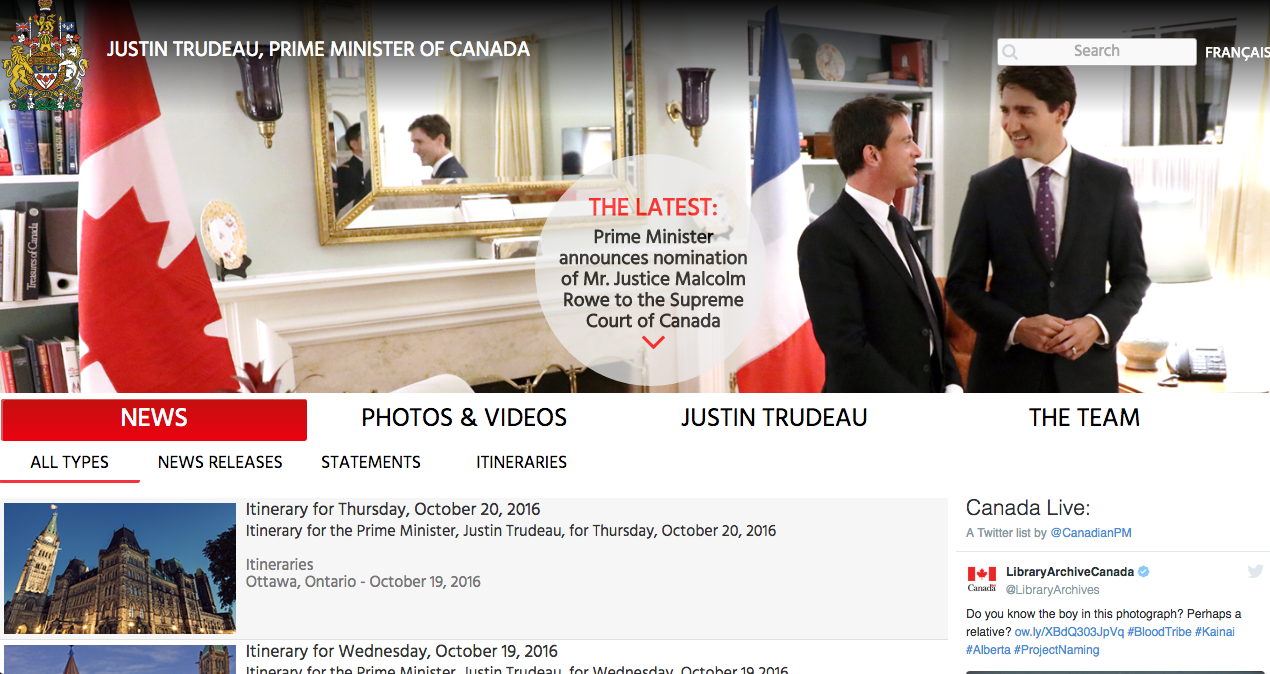

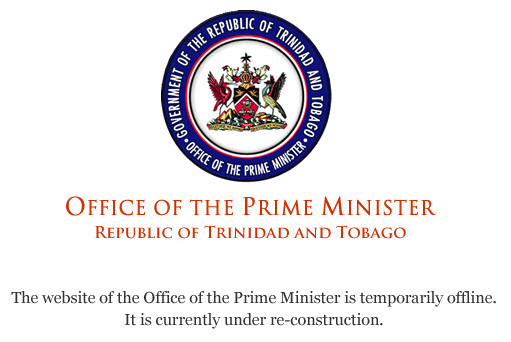
Why then when I google “Office of the Prime Minister of Trinidad and Tobago” I get an under construction message.  But when I google “Office of the Prime Minister of Canada” I get a dynamic website which even includes his itinerary.

office-of-the-prmie-minister-of-canada

In today’s world if you are interested in communicating with your population, you have to use the internet and the range of online tools which it offers.  Inviting yourself to a radio programme just allows you to speak to 18 percent of the population.  What about the other 82 percent?  And what about the youth cohort for whom the internet is their sand box?  Recently I was able to hear the Valedictorian on Facebook Live broadcast from one of the the graduation ceremonies at the University of the West Indies.  This just shows the power of the internet if used sensibly.

I can’t think of one reason why the Office of the Prime Minister of Trinidad and Tobago does not have a functioning website.  It must be a new deliberate strategy to not communicate.  It must be because my Prime Minister and his advisers have no desire to engage  “Pradeep Public”.  It must be because they are have no interest in being inclusive.  It must be because they think they have all the answers.  It must be that the Government just does not understand that the future we must create requires an ICT strategy which enables our people to have information at their finger tips.

We keep talking about diversification.  If ICT does not form the backbone of the diversification strategy then we’ll be saying welcome to the past”. 

Our country has the potential, the people and the creativity.  What we lack is the leadership!

Agree or perish …

Imagine the outcome if all government decisions were made on the basis of unanimity.  The people would benefit in unimaginable ways.  Instead what exists is government based on consensus which for some leaders means “I’ve listened to your views and will let you know what is your opinion”.  This happens in business organizations of varying sizes and objectives as well.  The difference is that in commercial organizations the business owner operates in his own interest, with his own funding, but in government, you are operating on behalf of the people who elected you so your decisions have intergenerational implications.

A world based on unanimity means we would all be of one mind.  It will make compliance so much easier.  The Greek philosopher Marcus Cicero said, “Great is the power, great is the authority of a senate that is unanimous in its opinions.”  Substitute senate with government. Unanimity means total agreement before we move on whereas  consensus means we have general agreement or accord.   Time and time again we have seen decision making by consensus fall apart and when it falls apart there are dire consequences. Coalition governments are notorious for decision making by consensus and it leads to weak decisions.

Dream with me for a moment: how would crime be impacted if the government, meaning party in power and the opposition agreed on a crime plan?  I guarantee you that crime would be reduced in a short time. Or if they agreed a method for party financing.  Then no financier would be able to hold anyone to ransom.

Unanimity as a method of operating is difficult.  Just imagine, planning your family vacation on the basis of unanimity.  It will be nightmarish but when you come to agreement it will make sense and be binding.  Our country has suffered tremendously because there is no mechanism for agreeing on the imperatives for development.  A Bajan friend lamented that elections in T&T mean starting over the race whereas in other countries it means passing on the baton.  I had no answer for this because it is so true.

Over the years we have lost tons of money on so many initiatives like building the Interchange, halting Vision 20:20 and building a mass transit system.  New governments feel compelled to stop whatever is in progress, repackage it and start over.  Boards change in private sector organizations but the strategic direction remains.  When it is time to change strategy, it is approached in a systematic manner.  When governments change strategy the population is hardly ever included. One can argue that the manifesto is the opportunity for inclusion of the population but the practice would not support such a thesis.  The need for a mechanism through which there is agreement is critical.

The next true leader to distinguish himself or herself in our country will do so by seeking unanimity on a few big ticket items.   The country is yearning for a different kind of leader with a style that is even handed, transparent and visionary.   Fifty years ago the Eric Williams vision transitioned us from colonialism to independence.  The leader of the future has to take us to the next stage -interdependence.

In an interdependent world we will have to focus more on broad interests and less on small niches of people who will benefit.  This means that objective criteria will have to guide decision making.  Technology continues to shrink our global village while events in the remotes places have huge impacts locally.   Our future survival requires a different approach.  Decision making based on unanimity is a doable option in a country of our size.