A Home for Despers …

A photograph by Maria Nunes stirred emotions in me that I thought I had quelled. I cry for Laventille when I remember the beauty of the people and the ambition and the sense of striving I grew up with. The callous may say, “Nostalgia!” But it was real. The memories are blurred, but the sense of being, living, knowing is as real as the moonlit sky with music in the background. It is as real as hanging over the pan stand and allowing the music to envelop your being ‘til the tenor pan rings in your heart … or stepping away and propping on a wall a little distance away, but close enough to feel every note. The panyard gave us hope!  We saw young men and boys who were “otherwise engaged” outside of the panyard performing at an exceptional standard and we respected them for their talent. Eventually some of them represented the country and therefore the community on the world stage. They “lifted our noses” as we used to say.

The Despers panyard was a communal space where we all felt safe. Visitors were protected and you believed that the Statue of the Virgin Mary atop the spire protected you from every evil.  For the 10 years I functioned as the Public Affairs Manager at Witco, going up the hill to lime was normal but then small incidents became bigger and bringing it to the attention of the Police was a waste of time.

How can a band with one of the longest sponsorship arrangements be homeless today – bouncing from vacant lot to vacant lot in the city of Port of Spain? How can a community which has elected the PNM solidly since 1956 be allowed to become so unsafe that it can no longer be home to its pride and joy? The children of Laventille have chased the band away from its own home and PNM Members of Parliament presided over this travesty. Had the Members of Parliament found ways for meaningful collaboration, maybe by now Despers would have been handed the keys to their new home.  Maybe, we would have had a functional, custom built pan theatre which is acoustically perfect for our national instrument. Maybe, we would have developed a blueprint for Pan Theaters throughout the country and indeed the world. Instead Despers continues to squat in their third (or is it fourth) location around the city. Or is it that I am just nostalgic?  Is Despers now an anachronism? Does the band still still connect with the community?

I think not.  Despers is as important as every other steelband in this country and it is time for us as a people to find a way to include steelband in our development.

My wish upon a Star

I believe many people want a leader who is able to form a human connection with them using both words and deeds. So my single wish for 2019 is a leader who communicates with us this way.

The last time I heard our leader speak was at the PNM Convention in Tobago and I got a sense that it was a checkbox item for him to place a tick next to and move on to the next item on his “to-do” list.

There are three reasons why I want our leader to communicate with us:

Firstly, the economic pundits predict that the economy is not going to be on an upswing anytime soon, so we need someone to rally the troops to convince us that we are “all in this together”. Our leader must help us understand that despite the massive layoffs, separations and firings over the past few years, there is a plan to collaborate to make things better. A leader who is good at communicating will convince us that his five years spent as Leader of the Opposition prepared him to lead us out of this predictable economic decline. He theoretically should have been intimately involved in analysing every budget presentation since 2010, so he should be fully aware of the state of the economy.

The second reason why I want our leader to communicate openly and honestly is that I am seeking reassurance that he is not simply acting in the interest of the “haves” in our society but that project formulation and implementation is being activated with a view towards long term sustainability. For example, I want to hear that the Beverage Container Bill has been completed and there will be a systemic approach to ensuring that single use plastics are separated at home and ready for curbside collection and recycling or disposal.

My third reason for wanting our leader to communicate effectively is that I believed him during the run-up to the 2015 election when he said that transportation is a quality-of-life issue and he encouraged me to imagine what life would be like when the commute from the east would be less than an hour. I want him to explain why nothing has been done to ease this burden. Maybe he should have consulted the Inter-American Development Bank before selling me that dream about a solution to the transportation problem.

Singapore, our starting-gate brother on the other side of the world, knows that without mineral resources, the only source of wealth is the people, and they have motivated, inspired and coerced their citizens to follow a dream which today positions them amongst the richest, most successful countries in the world. Their leader had (and continues to have) a vision of the future which was sold to its citizens. If we have a vision, then it needs to be communicated to us clearly. In the words of American philosopher, James Hume: “The art of communication is the language of leadership.” In Trinidad and Tobago, we have a leader installed but there is an absence of leadership. Had we been blessed with true leadership, we would have been inspired, persuaded and influenced to operate at our highest potential and maybe become the Singapore of the Caribbean.

Urban Renewal PNM style!

Recently I returned to the place of my childhood, Quarry Street, East Dry River. It was just 7:30 pm and the streets were quiet. No families sitting out … no fellas liming under the street light, just an eerie quiet. I noticed that there were several cars neatly parked on one side of the street. It struck me that this street of my childhood was no longer a neat row of houses with plants in the front, filled with the laughter of families enjoying the evening breeze from their galleries. The quiet was troubling and I wondered out loud, “Why people have stopped passing time under the streetlights and on the corners?” My passenger exclaimed, “Girlfriend, they fraid gun toting bandits!” Equally troubling was the dilapidated buildings which dotted this one-mile stretch from Observatory Street to the top of Quarry Street.

It’s true that things are always changing, but I expected that things would have been better. Instead the evidence of poverty and decline is “in yuh face”. The halfway “falling down” former family homes, the piles of garbage on the corners, the roaming stray dogs, the vine-covered trailer truck which once housed Syncopaters steelband — all tell a story of a community in decline. I wondered about the plan for resuscitation and renewal.

My reason for being there was to drop someone home. Our journey was filled with nervous chatter about the dangers of living in such an area and having to rely on the informal public transportation (unregistered drivers using their cars as taxis) which exists in the absence of any formal system in that area. Transportation there has always been problematic, and for the past 50 years, no government has worked on finding solutions.

This is just one example of a wicked problem crying out for a solution. This areas has voted solidly for the PNM except for the 1986 election when they temporarily voted for the NAR. It is not surprising that this community has been ghettoised over the past 40-something years, but it is time to try a different engagement strategy which takes the residents into consideration. A strategy of collaboration across the community with all stakeholders being accountable for the outcomes. The people who live in this community enjoy easy access to the city and are often not interested in moving out. They just want basic opportunities to live a safe life.

Breathing new life into that community can begin by simply helping residents unravel the ownership of the lands on which their houses are built. The rebirth and revitalization of our troubled communities is not only a government responsibility, it is an opportunity for collaboration and once it is successful in one area, has the potential to spread like wildfire to other communities. Two important quality of life factors are housing and transportation, both of which have proved to be unsolvable by our current politicians.

What we need are politicians with vision, empathy and backbone who are prepared to provide inspired leadership.

Gary needs more lightning, less thunder!

Brace yourself for heightened aggression from the police! That’s the message I received from the recent television interview with Commissioner of Police (CoP) Gary Griffith about the alleged Police killing of five young men in Laventille. To paraphrase this very powerful citizen – anyone who objects to his approach either has not been impacted by crime or benefits from the criminal elements. Additionally, this leader resorted to sarcasm and ridicule to respond to legitimate concerns being raised by the interviewer. In a direct jab at his predecessor’s failure to impact the level of crime, the CoP questioned: has it really worked well for the last few years? In a direct ridicule of the grandmother of one of the slain victims who said that the boys held their hands up, the CoP described her as “Super Granny flying through the air”. Super Gary is confident that he has 95% of the population backing him so feels emboldened to insult citizens.

If I were his boss, I would muzzle him for the next 90 days and only allow the Communications Officer to speak to the Media. My first reason for muzzling him is that we have not really seen the impact of his gun talk as yet. As I write, we are counting the number of murders committed for the weekend. Commissioner Gary needs to give his plans time to work before boasting about how he will peg back the criminals because the evidence is that so far, he has not.

My second reason for muzzling him is that he has to be taught what to say. Somewhere in the recesses of my mind is the saying: “not all talk good tuh talk”. His boast that he will fire anyone caught in wrongdoing simply confirms his ignorance of process and procedure. He cannot do so without following a specific procedure, but the Police Association will teach him that lesson. You may say, “That is not what he meant,” but a true leader would have responded from a position of knowledge. That kind of activity is best dealt with by your actions and not your statement of intent.

My third reason for muzzling him is that as a person in a position of leadership, sarcasm cannot be your “go to” approach. Sarcasm as a literary device is often used when intended to mock or insult. The Commissioner of Police should not be intending to mock or insult any member of the public, particularly the media and, in a media interview. His response “Oh Jesus Lord Fadder…” was simply out of place for a leader.

If the CoP’s boss takes my advice, he would have Gary work tirelessly on finding out exactly what happened with the killing of five youths in Laventille and provide an account to John Public. That would demonstrate his commitment to being accountable. His second task would be to identify a collaborative approach for members of the public to work with the police on providing the information they so desperately need and, thirdly I would make the process of promotion transparent.

And while Gary is on lock-down, his boss needs to remind him of the old Apache saying: “It is better to have less thunder in the mouth and more lightning in the hand”

Less Testosterone needed to solve the Petrotrin Issue!

The Petrotrin story could have had a better outcome if only there was less testosterone being thrown about.   This is clearly a situation of, “I am in charge and I will do what I want.” Considering that you have been a large part of the decision making over the past 20 years and are therefore responsible, do you believe that this how to run a company a (or country) competently?Collaboration Image
The PNM has presided over bad decision making and politicking at Petrotrin for decades, but now the Prime Minister and the Minister of Finance only want to express this situation purely with economics.  The crucial facet being missed by purely economic argument is that this is also a socio-cultural issue and a human development issue. It is about changing the way labour and business interact to produce outcomes, moving from the futility of adversarial stance to a collaborative one.

Once again, the government isis also missing the “boat” by turning its back on an opportunity to be a game-changer.  There could have been two outcomes; first, a message to “John and Kavita Public” that we have to give a fair day’s labour for a fair day’s pay and second, negotiated (ie. mutually agreed) outcomes are more likely to succeed than those which are adversarial.  For either of these outcomes to be achieved, deep dialogue and collaboration would have been required.

The leadership keeps missing the potential demonstration effect that can impact every part of our country.  Instead they choose the worn-out power play informed by “might is right” and the power of the patriarchy. Our country needs to see good minds get together (regardless of gender or socioeconomic status), and have a robust exchange of ideas to emerge with solutions which they all agree to uphold.  If that happens it will signal that we are really “all in this together”.  How can this autocratic display of power be allowed to occur in the lead up to elections? I keep hearing a line from Sparrow’s little ditty – “Who ain’t like it could get the hell out of here”.

The leadership is also missing the “boat” which can signal that there is always a middle ground that could be attained but it requires accountability, collaboration and transparency.  How could you sign a Memorandum of Agreement in April and less than six months later, pretend that it never existed? There was a time when a person’s word was his bond and we had gentlemen’s agreements.  Well, if a written agreement can be broken at this level, then what do you expect from the ordinary citizens? They will behave exactly as the leadership and speak with “forked tongues”.

The anecdotal evidence suggests that this population is waiting and anxious to follow anyone whom they believe will be honest and act in their common interest and not in the interest of certain cliques of people.  What the Prime Minister and his circle should be doing is figuring out how to get Roget and his aggressors to sit around a table and hammer out an agreement. They will all then have the moral authority to tackle WASA, the Police, the Health Sector and anywhere there is public expenditure in the provision of goods and services.

The industrial court has given us an opportunity and it is up to us to grasp it, run with it and be guided by the notions of Accountability, Collaboration and Transparency (ACT).

Requiem for Victims of Sexual Harassment

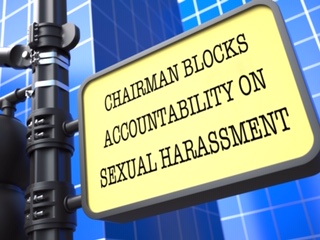
Disaster Concept. Desaster Ahead Roadsign.

You are cordially invited to

The Daily Requiem for all victims of sexual harassment at

Angostura Holdings Limited and indeed throughout Trinidad and Tobago.

The chief celebrant will be

Mr. Terrence Bharath,

Chairman, Angostura Holdings Limited.

In anticipation of his sermon here are two quotes from previous sermons. On July 17th, 2018, his response to my letter said in part:

“In any event, this matter has engaged the attention of the Company, its Attorneys and Board, for a sufficiently long period and the matter is now considered closed”.  Ltr to DDemming 17July2018 SIGNED

His response dated September 18, 2018 said in part:

“Angostura is a company registered under the Companies Act, there are rules and regulations which govern it its operations and dissemination of information. As a member of the Public I’m afraid that you are not entitled to the information which you seek in your letter of 10th September.”  T. Bharath September 18

Here are the questions I posed to the Chief Celebrant:

  1. Is there a sexual harassment policy at Angostura?
  2. When was it implemented?
  3. Was it accompanied by sensitivity/awareness training?
  4. How can a member of the public (an indirect shareholder) access the policy?
  5. What specific actions have the Board taken to ensure that the issue of sexual harassment is ventilated throughout the organization, taking into consideration that sexual harassment is not gender-specific.
  6. What is the clear process for an employee to bring a claim of sexual harassment to the management?

These are simple questions, the provision of whose answers could be easily dispensed with in order to close the matter.

But maybe, just maybe, if he answered the questions, it would be clear that the sexual harassment policy was not implemented until after the claim was made under the Whistle Blower policy. It was a situation of post facto implementation.

Maybe, just maybe, if he answered the questions, it would become obvious that there has been no sensitivity training for employees at Angostura Holdings Limited.

Maybe, just maybe, if he answered the questions, we would realize that the sexual harassment policy is opaque.

Mr. Terrence Bharath was a member of the Board of Directors which presided over three failed attempts to investigate exactly what happened. He is now slapping his female workers in the face by using the Company’s Act as a shield against the legitimate questions and he might be right, but there is a larger dilemma to be considered.

What is the responsibility of companies which are partly owned by the State? Was the Prime Minister not acting on behalf of the people of Trinidad and Tobago when he appointed the Board of Directors? Shouldn’t the tenets of accountability and transparency apply? Don’t we (members of the Public) have a right to be informed of the policies of companies which are partly purchased by our tax dollars?


 

Enlightened Leadership is needed!

Amcham and Cipriani Labour College recently demonstrated what enlightened leadership can look like when they hosted a conversation about the closure of the Petrotrin refinery. The numbers presented at that session painted a grim picture and a persuasive argument for the closure of the Petrotrin refinery. That information is not new – we knew that the Pointe a Pierre Refinery was a disaster since Texaco left but successive governments chose to operate a failed model and keep up the lie that TnT was a key energy player while they presided over this make-believe scenario that a small country of 1.3 million people was big in the petroleum dance. We did have a “moment of glory” in the natural gas sector. From the presentation of the Chairman of the Board, it is clear to me that their decision making has gone beyond the closure of the refinery. I am sure that the Prime Minister is waiting for the right timing to announce the new arrangements.

Closing the Petrotrin Refinery is not simply a matter of dividing up two billion dollars by 2,800 and “calling that George”. This decision will haunt us for a long time and deepen the groove of “learnt helplessness” further into our collective psyche.

I marvel at the absence of any sociocultural analyses of the potential impact of this closure. I expected that the closure of Caroni would be used as a case study to not repeat any mistakes. So I expected some analysis of its impact on fence-line communities; to be directed to a report showing how the land use has impacted the communities; to be advised how the absence of Caroni has impacted small business, maxi drivers, schools, sports fields etc. Such reports would have made me think that we are learning from past experiences and ensuring that we do not repeat the same mistakes of the past.

Instead the population is left waiting for the next round of announcements and workers don’t even have a worked example of what their severance package would look like. More importantly, 3,500 families go to bed every night thinking about their next move but not being able to plan anything because they simply do not know how or where to begin.

My deep concern is the impact of the closure of Petrotrin the on our human capital. This is a human development issue which if not addressed positively, will spell the continuation of our poor work habits and the lack of a shared vision of our future self. No matter how this dice is rolled, we’re in for hard times and the government will not have the money to sprinkle on the rough seas.

UWI professor Dr. Roger Hosein said: “We are all to blame, as after 3.7 billion barrels of oil and gas equivalent between 2007 and 2018, we are basically back to 2007 GDP”. I disagree with Dr. Hosein and place the blame squarely at the feet of our politicians, both PNM and UNC derivatives. They have both facilitated unsustainable governance structures; pretended that corruption did not occur under their watch and kicked the problems down the road. The chickens have now come home to roost and it falls to the current Prime Minister, Dr. Keith Rowley to provide the inspired leadership that is needed to help us change our behaviours.

The late Andrew Carnegie said: “Take away my people, but leave my factories and soon grass will grow on the factory floors … Take away my factories, but leave my people and soon we will have a new and better factory.” Well, The Man From Mason Hall now has a monumental task on his hands. His success and our success or failure is inextricably bound. For him to begin to solve this problem he must be accountable to the entire nation for the decisions which have been made about Petrotrin. For him to make the right decision he must demonstrate an ability to be collaborative and transparent. Mr. Prime Minister … may you be haunted by the notions of accountability, collaboration and transparency as we cure this “Dutch Disease” once and for all. That’s the job you applied for, so just do it!


Petrotrin – A Sociocultural Fiasco …

glass half fullI’m a “glass half full” kind of person, which is why I see the Petrotrin closure as an opportunity for inspired leadership on one hand, and the transformation of our people on the other. Leadership and transformation both require a willingness to change the way we see things. The behaviourists talk about changing our mental models, but before we change those mental models we have to engage in a deep conversation about how and why we need to change. And this is where my “glass half full” notion becomes fragile and even smashes to smithereens. All I see before me is confrontation … one-upmanship … winners [those who think they are] and  losers [many who know they are]. This is too important a decision for fragile egos to prevail. It requires inspirational leadership and communication. Businesses go “belly-up” every day but what makes a difference is the capacity of the people involved to see the opportunity in the crisis, and their willingness to roll around in the mud and come out with clear action plans which will be honoured by gentlemen.

The closure of Petrotrin goes way beyond the disappearance of the flare which has brightened the skyline for more than 75 years. The closure will see the darkening of more than 35 fence line communities which thrived because of the business generated by employees at the Refinery. Gasparillo, Marabella, Plaisance Park, Claxton Bay will change because the refinery no long exists. The delivery of medical services to 20,000 persons annually will also change. The positive outcomes derived from the company’s support for sport and culture will change if not disappear. These are not hard economic arguments but sociocultural considerations.  Indeed; the loss of activity in the area will cause loss of business to the area – from fruit and snack vendors to stores and gas stations – all will be affected. These business owners might go from contributing to the economy, to being a drain on it. The loss of healthcare might financially finish off some families, who also might end up having to rely on government handouts.

From a Leadership viewpoint, we will see the extent to which this Rowley led administration can use this as an opportunity to change governance structures at state enterprises. We will see if there is the capacity to transform the public service. We will see if a model emerges which can make WASA into a productive enterprise. This situation has been played out before – the loss of the sugar cane industry which is thriving in other parts of the world (not just for sugar, but alcohol as fuel and other products).  If none of these happen then it will be fair to conclude that another opportunity for transformation has been squandered and perhaps the leadership capacity just does not exist.

So, the jury will be out for some time with regard to leadership but with regard to communications, the murkiness in the environment confirms to me that it is a textbook example of how “not” to handle communication of a major decision. In today’s mediated communications world, leaders have a responsibility to shape their narrative by telling their story. The story of the closure of the refinery has not been told and if anything has raised a level of mistrust which will take a long time to change.

What we are seeing is an “old power” approach in which the Prime Minister and a select few hoard resources like a dam holding back water, flooding some areas to destruction, while causing drought elsewhere. What is actually needed is a new power approach which is “open, participatory and distributed”, the way rain and rivers distribute water in a forest, so everything grows and thrives. Countries like Qatar, Saudi Arabia and Norway are successfully doing this, so this is not a pie-in-the-sky idea.

The big question remains: Is the T&T leadership grown-up enough to do this, and are the T&T citizens responsible enough to handle the resources?

Mr. PM … Be a Builder not a Destroyer!

In the lead-up to the 2015 general elections, the then Leader of the Opposition “went to bed” with the Trade Union Movement and they birthed an agreement. Post 2015, the now Prime Minister has crept away from his partners and abandoned the product of that union. Today, he is in essence saying: “If you want the child, then put down your money.”

Trinidad & Tobago has abandoned Coffee, Cocoa, Sugar, Citrus, Coconut and now Oil Refining. The late Walton James, former Managing Director of Trintoc et al must be turning in their graves, because when they approached the late Prime Minister Dr. Eric Williams to purchase Texaco, this was not the outcome they expected. They may have dreamed of a T&T where we are operating a fully integrated energy sector, spanning exploration, production and marketing. The several refinery upgrades have all been in an attempt to strengthen the refining sector but the politics keeps getting in the way, because we systematically destroy what each previous government administration does, then populate the space with square pegs. The Union is not blameless because they have taken the position of, “We too, deserve to live ‘high off the hog.’” The twin problem of puerile politics and lack of productivity is finally on our doorsteps. We can see it as an opportunity to fix both, but that requires leadership with a macro or is it “maco” vision.

Instead, Prime Minister Rowley has continued the negative messaging that we cannot build and grow, we can only destroy. Except for the Pt. Lisas Estate, the slash and burn philosophy continues. This murky Petrotrin decision smacks of either lack of clarity of the intended outcome, ineffective communications or the need to reward favoured supporters. Here was an opportunity to hammer out an arrangement with the Trade Union for the successful operation of the Refinery. There is no shortage of “young” retirees with the knowledge to change the culture of Petrotrin, but we continue to judge capacity on the basis of political leanings. If we are able to collaborate with the most ferocious trade union to take the journey toward culture change, we can change the entire country. If high productivity and innovation became the core values at Petrotrin under a collaboration with the Oilfields Workers’ Trade Union leadership, all other unions would follow and indeed, the entire society.

This lack of productivity and wastage is not confined to Petrotrin and the State sector but is just as prevalent in the private sector which continues to survive and not thrive. What is needed is a leader who can inspire us to strive towards a higher ideal, instead what we continue to be told is that we have failed, while what is needed is the inspiration for us to rise from failure and strive for a higher standard.

We learned the plantation model well and it is time to unlearn it. We are reviving the cocoa industry, but it is still on the basis of exporting the raw product, why couldn’t we invest in chocolate manufacturing on a global scale so that the sector is really stimulated. Doesn’t anyone in TT dream of this?

We abandoned Caroni, but just a 90-minute flight away, the sugar estates in Guadeloupe continue to thrive and their several rum distilleries conduct daily tours teaching the world how to assess a good quality rum. Can we not envision this for ourselves?

We abandoned coffee and there is an unprecedented revival in the coffee industry.  For each example I have used we made the wrong decision.

Once again, we have taken the easy way out. Shut it down, sell it off and send the message that our citizens should continue to be hewers of wood and drawers of water. Maybe there can be a make-up of the busted relationship between the Prime Minister and the Labour Movement. Such a make-up could birth a new age of productivity and national pride in Trinidad and Tobago. The excitement of such a possibility  would leave me feeling that my cohort inspired our nation to be doers as well as dreamers!


Demise of Refining – The Legacy of Prime Minister Dr. Keith Rowley

I left the oil Industry in 1989 because I was impatient with the wait for the VSEP money which was rumoured to be on the way.  Since then, citizens of Trinidad and Tobago knew that Trintoc/Petrotrin needed dramatic restructuring, but our politicians continued to use the company as a reward centre for party faithfuls while organizational decay took root.

Petrotrin’s arrow to the heart occurred under the watch of the PNM with the failed gas to liquids deal. The principle of collective responsibility requires that the current Prime Minister and Minister of Finance take full responsibility and admit that they were part of that decision making.  They were part of the government of the day. Maybe this bold move by Prime Minister Rowley is such an admission and an attempt to redeem himself and the PNM. But this decision in his 35th month in office is problematic.  Does he have the time to recover from the fall out? 1,700 families will wake up with a cheque in hand, but little else.  Several other families of contractors, small businesses and suppliers will soon after realize the dagger to their hearts.  The “Wetman” and John Public will be asking … so how am I getting gas for my TIDA? The legacy voters of the PNM will be waiting to be told what the next move will be.  The Prime Minister is relying on the PNM faithful to help him ride this tumultuous wave.

Over the past 20 years, we have seen alternative administrations dismantle the decisions of their predecessors to the detriment of the country.  You and I, our children and our grandchildren will all have had to pay the price for the arrogance and lack of collaboration of these people. Not one Prime Minister over the past 20 years has demonstrated the ability to act in the national interest by doing whatever was necessary to collaborate on these huge decisions.  Prime Minister Rowley could have used this opportunity to “Collaborate With the Enemy” (the title of a book by Adam Kahane – http://a.co/d/4uFtibC ) with a vision of Trinidad and Tobago in 50+ years.  This issue is bigger than crime and money laundering because of its economic, social and political impact.  My memory of it will be how my generation failed after a 75-year experiment with the refining industry.

The founder of the PNM, the late Dr. Eric Williams sold me the concept of taking charge of the commanding heights of the economy.  His successor is now systematically dismantling every vestige of those commanding heights.

For more than two years, I have been writing about the need for accountability, transparency and collaboration and how it can potentially impact us positively.  This is another lost opportunity for true collaboration in order to change the conversation. Instead what prevails is the “winner take all” strategy and dominance of the patriarchy.

So far, your legacy, Mr. Prime Minister, is to dismantle the vision of our first Prime Minister.

I suppose, when you return to Mason Hall and the 3 golf courses, you will feel proud that it was not “From Mason Hall to White Hall” but From Mason Hall to Mason Hall!