Will the 2 become 1?

In traditional marriage ceremonies, the Priest says that the two shall become one but never gives a timeframe.  This journey to becoming one is often marred with differences and conflict.  A successful marriage requires that you answer the following 4 questions:

  1. What are our shared goals?
  2. What will our sex life look like?
  3. Are we interested in parenting?
  4. How will we manage our money?
Photo by Jasmine Carter on Pexels.com

Shared Goals
The early establishment of shared goals can create excitement and purpose as the marriage journey unfolds.  These shared goals not only guide the couple’s path but also foster excitement for a future built together.

Sex Life
Equally vital is open communication about sexual preferences, frequency, and boundaries.  Too often couples are embarrassed to talk through the details of how their sexual activities will unfold and this can negatively impact their need for intimacy.

Parenting
Parenting should never occur as an accident.  Bringing a human into the world is so important that it requires a deep discussion to ensure that the couple is aligned on the number of children, the timing, and even the approach to discipline and development.

Finance
Goal setting, sexual preferences, and parenting will only be successful if there is a meaningful discussion about financial compatibility.  Couples should openly discuss spending habits, savings, and financial goals, even if it results in maintaining separate accounts. Transparency becomes the bedrock, avoiding secret accounts and preserving trust. Honest communication ensures a clear understanding of how money will be spent and saved.

Becoming One
Understanding and addressing these aspects early on will create a solid, unified foundation for a successful long-term relationship. Failure to engage in these discussions may lead to future conflicts, separation, or divorce. It is crucial for couples to openly communicate and find common ground in these key areas to build a resilient and enduring relationship.

Author: Dennise Demming, MSc, MBA
Wellness Therapist, Communications Coach, Speaker
868 761 9426
Reset Our Business Processes

The money you work for, taken from you by way of taxes, is being used for strange things. Would you approve using scarce foreign exchange for a management programme which allegedly includes training employees to communicate with the dead and self-heal with ‘white light energy’?

The Government of Trinidad and Tobago (GOTT) is a shareholder in multiple companies and conglomerates, which means the money they have taken from us is being invested in companies that may not be handling their resources transparently.

One example is the Parisot-Potter/Massy Holding issue which led to her resignation as Executive Vice President of Business Integrity and Group General Counsel.  Her resignation may have closed the door on Massy’s opportunity to investigate her allegations, but it does not end the matter. This case extends far beyond Angelique Parisot-Potter and is a powerful reminder of the systemic changes required to begin building a society founded on trust, integrity, and transparency.  Both private and public sector organizations should see it as a prompt to re-evaluate several issues, from the selection of service providers to the allocation of the use of foreign exchange.

The Parisot-Potter/Massy Holding issue can be viewed as a rallying cry which highlights the urgent need to change the way we work in both public and government sectors. We must put procedures in place that have built-in checks and balances to ensure that no chain of events can occur that can’t be later examined in detail. Every step of every procurement must be traceable, with clear evidence of how money or other resources are spent.

The (GOTT), as a major shareholder in Massy Holdings should be interested in the levels of accountability and transparency which are implemented in the organization.  To be clear: GOTT shareholding means citizen shareholding, making it necessary for citizens to understand what happened with Parisot-Potter and what were the key learnings. It is the money of citizens that is possibly being misspent.

Regulatory bodies and government institutions play a pivotal role in this process, establishing and enforcing stringent guidelines that hold organizations accountable for their actions. Companies, too, must proactively adopt ethical standards, conduct regular audits, and engage in responsible business processes.

Calling for a reset goes beyond mere rhetoric; it demands concrete actions and practices. Collaboration between the public and private sectors becomes paramount, to foster a shared commitment to rebuilding a society founded on trust, integrity, and transparency.

The Parisot-Potter Massy Holding debacle calls for a National Reset

The Parisot-Potter Massy Holding fiasco highlights the issues deeply permeating and plaguing our country, where the absence of properly thought-out systems, structures, and processes leads to dysfunctionality and unwarranted drama.

Massy’s General Counsel released information at their Annual General Meeting accusing the Board of Directors of misusing precious foreign exchange for dubious and costly training exercises. The fact that she raised this concern with the Board, and appears to have been ignored, leading her to release the information publicly suggests an apparent inability to find common ground at such a high level.  This triggers a potential cultural issue that may permeate the entire organisation, ultimately affecting its customers. 

After the General Counsel “hit the ball out of the stadium” the Board responded in a news release, saying they were “appalled at the conduct”, and mentioned the initiation of a “disciplinary process to review Ms. Parisot-Potter’s conduct at the AGM.”  

Think again, Massy!  The apparent lack of a proactive strategy by your Board of Directors and the group CEO, resulted in a knee-jerk reaction to salvage the company’s public image after the matter has become widespread.  I wonder what was the internal response to the initial 13-page document of allegations by Ms. Parisot-Potter!

The tone of the news release suggests undeniable embarrassment, leading one to anticipate potential termination or removal. However, a more constructive approach would have been to acknowledge the incident openly and shift the narrative toward implementing strategies to enhance communication across the company.

Massy, the primary focus should now be on devising a comprehensive recovery strategy and identifying necessary actions. Rather than dwelling on punitive measures, consider fostering an environment that encourages open communication, internal cohesion, and a commitment to addressing concerns constructively. This proactive stance promotes transparency and can position Massy as an organisation committed to continuous improvement and resilience in the face of challenges.

My interest in this Parisot-Potter Massy Holding situation stems from the realization that issues of inadequate structures, systems, and processes extend beyond the public sector, affecting the private sector as well. It’s a call for our country to reset, implementing robust frameworks that foster accountability and transparency in both public and private organizations.

Vote based on shared principles

VOTING has evolved into a commercial enterprise within our twin-island republic. Over the past six decades, it has shifted from a genuine act of civic engagement to a mere transactional activity.

My mother-in-law (the late Hannah Demming) and her contemporaries lobbied for universal adult suffrage and for women to be given the right to vote. They understood the true significance of participating in the democratic process. They were also proud champions of women’s rights.

Sadly, our society has transformed and, in today’s world, there are people who promote political parties because they are being paid; some for cash and a T-shirt, while others expect to get a house, or a contract, or a job. Our two race-based political parties are allegedly guilty of purchasing votes.

In 2010, the coalition of the People’s Partnership, made up of five political parties-the United National Congress, the Congress of the People, the Tobago Organisation of the People, the Movement for Social Justice and the National Joint Action Committee-won the general election.

An Express article of July 7, 2015, reported a statement by then-opposition leader Dr Keith Rowley that ‘government ministers are handing out hundreds of thousands of dollars in cash to buy votes in the upcoming general election’.

Another disconcerting example of voter purchasing was highlighted in a television interview featuring a woman who openly admitted to attending a protest solely for financial gain.

In these instances, individuals were paid to lend their presence to political events, neither with genuine commitment to the party they support nor an understanding of the value systems to which they ascribe. The disconcerting truth is that our leaders and their close-support circle begin their journey with corruption and expect that when they get into office, they will somehow transform these supporters.

These payments from political parties extend beyond mere cash transactions. The phrase ‘who has more food feeds more fowl’ sadly captures the prevailing sentiment in our society, reflecting a transactional approach to civic engagement.

The deeply disheartening issue is that we do not understand this is an artificially created situation engineered over decades to benefit a few people, among whom are members of the government and opposition alike.

We have been artificially kept in a state of lack for decades. We should have been the most developed Caribbean country, but our income has frequently been diverted to places unknown.

Critical infrastructure has been ignored; major water lines, healthcare services, education systems, even traffic control have not been adequately maintained, even though we made billions of dollars of foreign currency reserves. Because this has happened, politicians now have a condition where they can buy votes to stay in power while delivering nearly nothing to their employers (the general public).

The true impact of voter buying is that it has diminished the fundamental democratic right for citizens to express their civic duty.

As a society, we stand at a crossroads, with an opportunity to redefine our values and practices. Initiating this change at the political level is where we need to begin. We must encourage citizens to vote for a party based on shared principles, rather than inducements. This shift in perspective can pave the way for more genuine and principled democratic participation, restoring the true spirit of voting as a powerful tool for civic expression.

We owe it to ourselves and our children to shift voting from a transactional activity to a genuine act of civic engagement. It is time to take back the power we surrendered (our votes) so that we can, for ourselves, decide how our country should grow.

Rethinking Property Tax

In the past 14 years, Trinidad and Tobago has operated without the collection of property taxes from its citizens, with the last instance occurring in 2009. While recognizing the Government’s need to generate income, I am concerned about the inefficiency and incompetence with which they manage already collected funds.

Media headlines frequently expose instances of public fund mismanagement and wastage, prompting a pertinent question: before adding further financial burdens to citizens, shouldn’t the Government address these issues of inefficiency and incompetence? If you’re trying to keep water in a tank, doesn’t it make sense to repair the leaks first?

So, rather than burdening citizens with additional property taxes, the emphasis should be on ensuring competence; and implementing effective systems, processes, and procedures within the Government.

Of particular concern is the impending burden on the ‘Baby Boomer’ demographic due to the proposed property tax legislation. This demographic, either retired or on the brink of retirement, faces a significant reduction in income. It raises a critical question: why would a government deliberately impose property taxes on assets owned by retirees? Often asset-rich but cash-poor, retirees have dedicated years of hard work to home ownership and should not be subjected to additional financial strain during their retirement years.

Post-retirement, reduced income already places retirees in a precarious position, struggling to meet monthly expenses such as water bills, electricity bills, and home maintenance. The introduction of property taxes to their financial obligations could potentially force many retirees to contemplate selling their homes simply to make ends meet.

Let’s not forget that the children and grandchildren of those Baby Boomers may witness their elders lose the assets, for which they worked decades, to a government that will be perceived as grossly incompetent. Do we believe these intelligent young people will still be ‘red and ready’?

A viable solution to this dilemma is to advocate for ‘axing the tax’, with Baby Boomers leading this transformative initiative. The proactive involvement of the Baby Boomer generation has the potential to catalyze positive change within our country.

The primary focus should shift towards responsible governance, emphasizing efficient resource management and prioritizing the well-being of retirees who have made substantial contributions to society.

Before imposing any financial strain on this vulnerable demographic, it is imperative to address the broader issues at hand. Let us collectively strive for a government that ensures fiscal responsibility and places the welfare of its citizens at the forefront of policymaking.

Dress Down Rowley

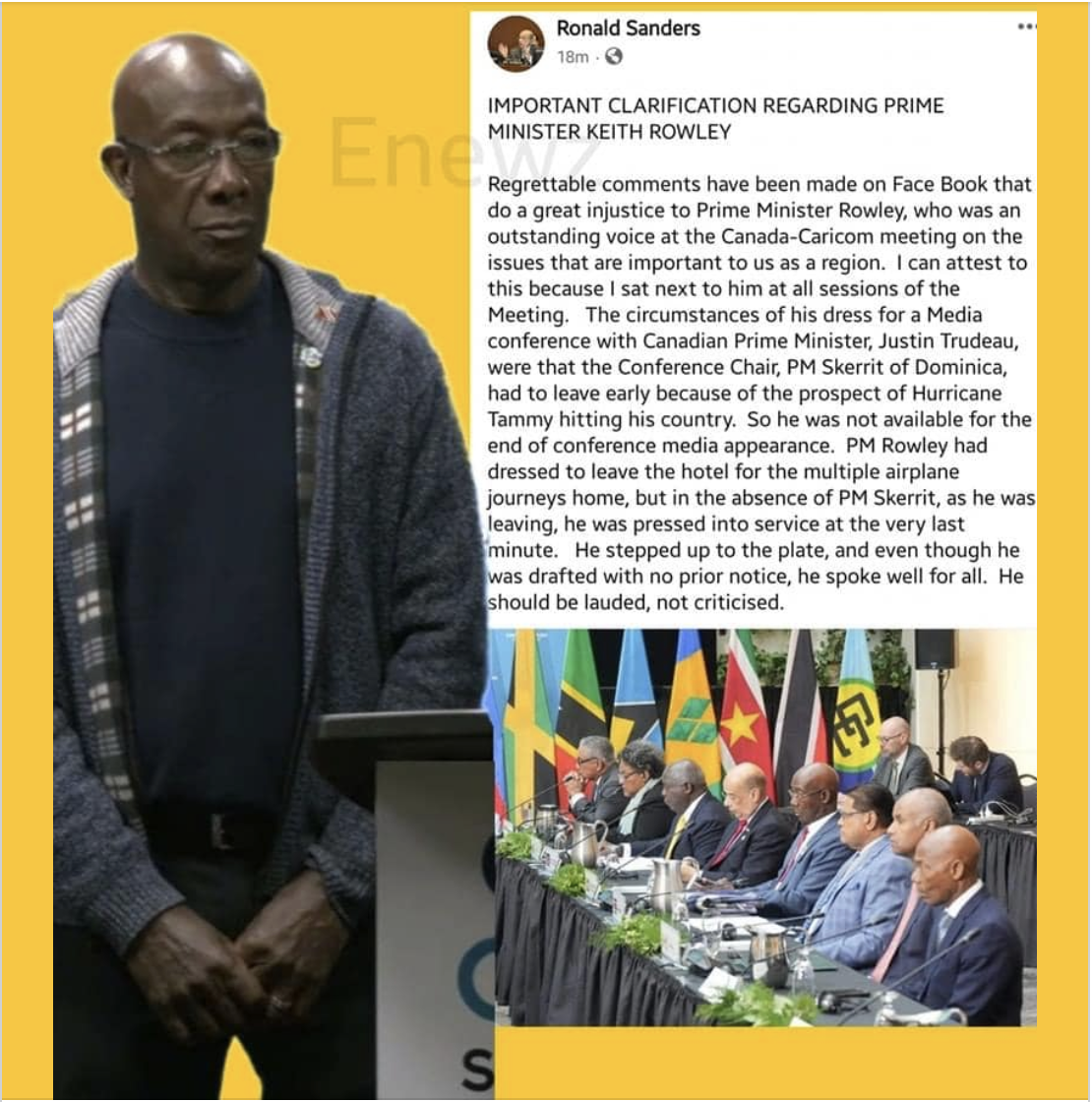
What is happening to my Prime Minister? What was his inspiration to be casually dressed at the closing ceremony of the inaugural Canada-CARICOM Summit.  A photograph from the closing ceremony showed Canada’s Prime Minister, Justin Trudeau, and Guyana’s President and Dr. Irfaan impeccably dressed while my Prime Minister wore a casual jersey paired with a hooded sweater.

This visual contrast raised the question: Is my Prime Minister truly engaged on behalf of my country? How does he think the world will assess the quality of our nation’s global representation?  Some may interpret his choice as an attempt to connect with everyday citizens and I respect that perspective. But I felt ashamed.

There might be a valid explanation for this nonconformity, such as the unfortunate scenario of his luggage being misplaced or failing to arrive with him. Although the chances of the Prime Minister’s luggage not arriving in a foreign country are slim, such an event would warrant investigating potential lapses in responsibility, and somebody should be fired.

Even in the event of his luggage not arriving, his accompanying team should have the capacity to swiftly visit a shopping mall to acquire suitable clothing.

An alternative rationale for his choice of attire could be a scheduling mishap. Perhaps, while on the golf course, an unforeseen urgency arose, requiring an immediate meeting with the Canadian Prime Minister. In his haste to return to his lodgings, he may have been unable to locate his formal attire, leading him to represent our nation in casual wear. Nonetheless, this possible explanation is my imagination overworking because conference agendas are typically well-prepared in advance.

A third possible reason for his relaxed appearance could be a deliberate attempt to convey a message that the world should transition away from formality in favor of more informal and friendly interactions. I hope that his departure from traditional attire will not be misconstrued as a breach of protocol and diplomatic norms.

Regardless of the reasons behind my Prime Minister’s seemingly unconventional attire in representing our nation, I extend my empathy and understanding. This incident offers us another opportunity for introspection as a nation. As the next election approaches, we should make decisions to ensure our country’s global representation meets the highest standards.

What is our sustainability strategy?

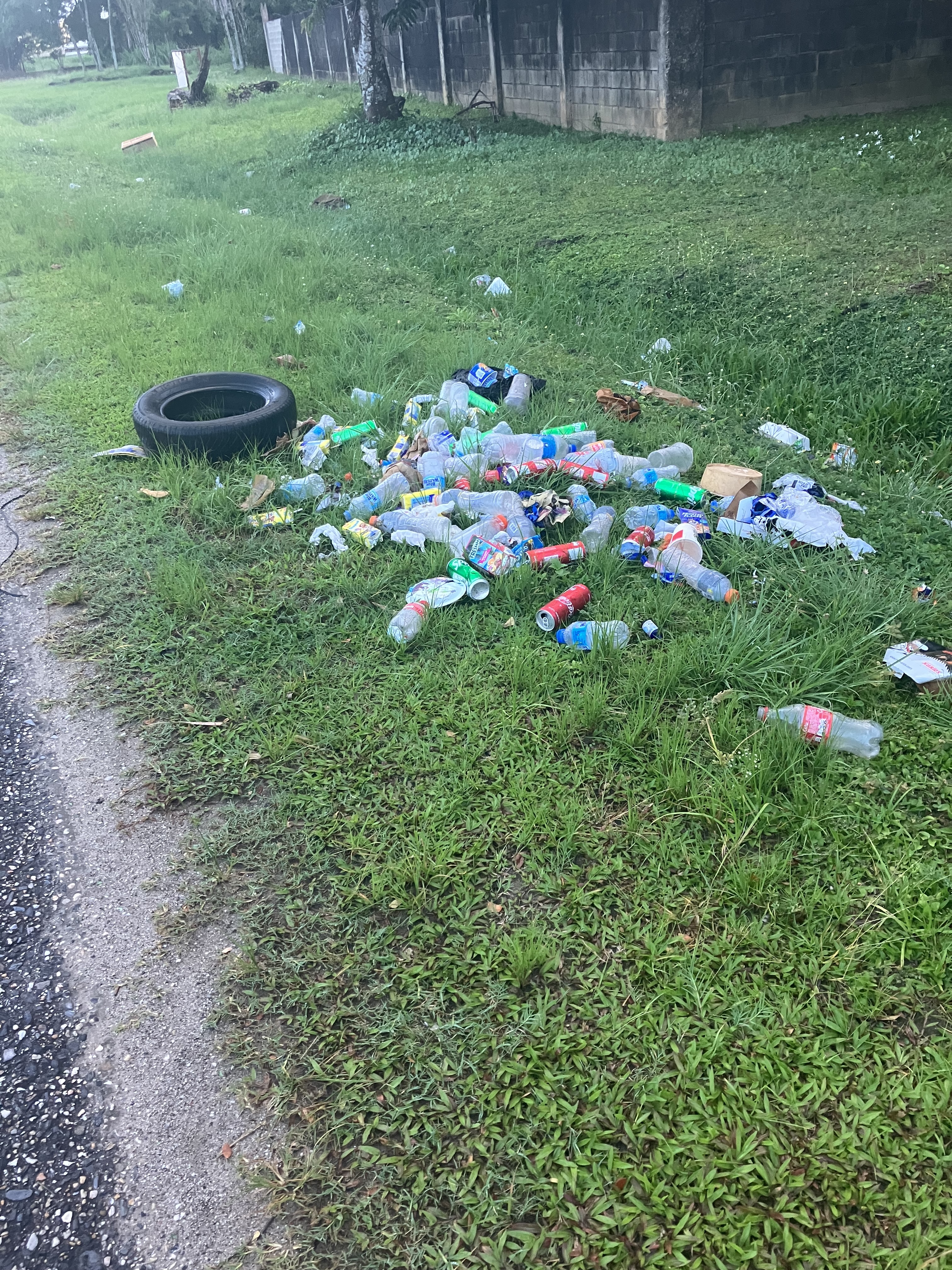
Whenever I visit developed nations, I can’t help but reflect on the beauty of Trinidad and Tobago (T&T) and feel a profound sadness about our limited focus on sustainability. In developed countries, sustainability initiatives are conspicuous, ranging from immaculate streets to responsible waste management and eco-friendly practices. Without transformative changes, our islands’ natural beauty will continue to wane.

One of the most evident indicators of sustainability in developed nations is the cleanliness of their streets and public spaces. The absence of litter and debris reflects not only a dedication to maintaining a clean and healthy environment but also the effectiveness of education systems in raising awareness about the perils of poor hygiene. The simple presence of strategically located garbage and recycling bins that are routinely emptied encourages citizens to dispose of waste responsibly.

Plastics on the Diego Martin Highway

In stark contrast, many parts of our country lack recycling bins, and recycling’s importance is frequently underestimated or even dismissed as an unnecessary burden. To compound matters, our largest supermarket chain recently terminated plastic bottle collection sites in their stores.

Another stark contrast in sustainability is the use of plastic bags. In developed nations, single-use plastic bags are a rare sight, while our nation grapples with excessive plastic bag usage, which not only contaminates the environment but also poses grave threats to wildlife and our marine ecosystems. It is high time we acknowledge the dire consequences of such practices and take action to reduce our reliance on disposable plastics.

The gap between our nation and the developed world in terms of sustainability is a cause for concern, necessitating immediate action. Achievable goals such as clean streets, responsible waste management, and reduced plastic use lie before us. The key lies in adopting a clear sense of purpose and understanding the consequences of our actions. Until our leadership wholeheartedly commits to making sustainability accessible and transparent, we will continue to confront challenges where rules are flouted, and substantive progress remains elusive. The time has come for a comprehensive reset, a journey toward a more sustainable and responsible future for our beloved nation. However, a transformative shift will not materialize under what can only be described as ‘Ketchup and Mustard leadership.’

Shaping a brighter future for T&T

Archbishop Gordon, you’re right: fairness hasn’t been a strong commitment in T&T, whether at the individual, group, or national level. But if we dig deeper, I’m certain we’ll uncover evidence that our government administrations have been enablers of white-collar crime over time. What’s even tougher to accept is that in many corners of our society, only a handful of people truly champion what’s right. And why should they? It often appears that doing wrong brings rewards, while consequences are absent. It’s as if the template we’ve been handed from the church is totally different from the one being used in everyday life here.

Let’s pause and consider what occurs when a political party wins an election. They don’t act like responsible leaders; rather, they behave like a group that’s “in charge now.” They rapidly hire their own friends and allies while sidelining those from opposing parties, even if those sidelined people are better fit for positions. It’s as if the concept of governing is completely absent from the government.

To me, three specific cases stand out from the current government. The Finance Minister dismissed the former head of the Central Bank of Trinidad and Tobago (CBTT), Jawala Rambarran. The court deemed this unfair and awarded Rambarran $7.5 million for his 2015 job loss. But why did the Finance Minister not face any consequences?

Then there’s Arjoon Harripaul, once in charge of the Deposit Insurance Corporation (DIC). He walked away with $2.75 million as a settlement for his lawsuit for unjust dismissal.

Another case involves 20 former employees of the Security Intelligence Agency (SIA), who received over $10 million in total for being let go during the Persad-Bissessar regime.

These three cases have cost taxpayers $20 million, yet no one has borne any consequences for this misuse of funds. If good leadership were the aim, there should have been a stronger focus on evaluating these individuals’ performance. Instead, it’s more like, “We’re in control, so we’ll remove anyone who supports the opposing party or voices disagreement.”

Our society suffers due to the unintended repercussions of poor leadership and corruption. In fact, ineffective leadership is allowing criminals easier access to government systems, enabling them to break the rules.

Many believe that knowing the right people lets you escape consequences. Hence, some build homes on public lands, fully aware it’s against the law, but they’re confident nothing will happen. Others occupy old train lines or flout rules as the norm.

For a better society, we must alter our approach. The current leaders have demonstrated their inability to bring about meaningful change. To see different outcomes, we need a fresh strategy. It’s our responsibility to discover our voice and express our concerns in a new way.

So I ask: how can we, as individuals, collectively shape a brighter path forward? The silence facing my question speaks volumes.

Minister Sinanan … How many more must die?

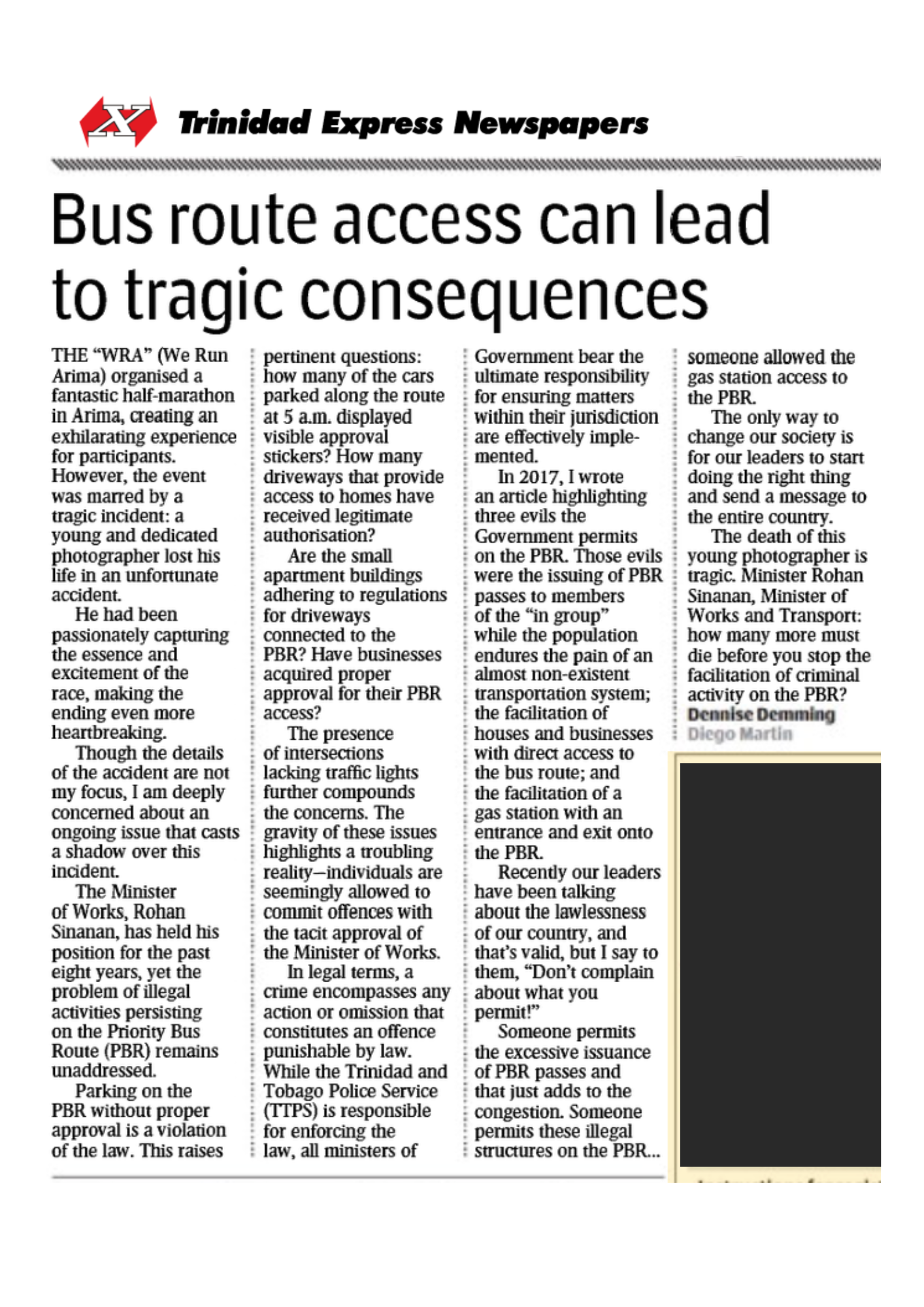
The “WRA” (We Run Arima) organized a fantastic half-marathon in Arima, creating an exhilarating experience for participants. However, the event was marred by a tragic incident: a young and dedicated photographer lost his life in an unfortunate accident. He had been passionately capturing the essence and excitement of the race, making the ending even more heartbreaking.

Though the details of the accident are not my focus, I am deeply concerned about an ongoing issue that casts a shadow over this incident. The Minister of Works, Rohan Sinanan, has held his position for the past eight years, yet the problem of illegal activities persisting on the priority bus route remains unaddressed.

Parking on the Priority Bus Route (PBR) without proper approval is a violation of the law. This raises pertinent questions: How many of the cars parked along the route at 5:00 am displayed visible approval stickers? How many driveways that provide access to homes have received legitimate authorization? Are the small apartment buildings adhering to regulations for driveways connected to the PBR? Have businesses acquired proper approval for their PBR access?

The presence of intersections lacking traffic lights further compounds the concerns. The gravity of these issues highlights a troubling reality – individuals are seemingly allowed to commit offences with the tacit approval of the Minister of Works. In legal terms, a crime encompasses any action or omission that constitutes an offence punishable by law. While the Trinidad and Tobago Police Service (TTPS) is responsible for enforcing the law, all ministers of Government bear the ultimate responsibility for ensuring that matters within their jurisdiction are effectively implemented.

In 2017, I wrote an article highlighting 3 evils that the Government of Trinidad and Tobago permits on the PBR.  Those evils were the issuing of PBR passes to members of the “in-group” while the population endures the pain of an almost non-existent transportation system; the facilitation of houses and businesses with direct access to the bus route and the facilitation of a gas station with an entrance and exit onto the PBR.  

Recently our leaders have been talking about the lawlessness of our country, and that’s valid, but I say to them, “Don’t complain about what you permit!”  Someone permits the excessive issuance of PBR passes and that just adds to the congestion. Someone permits these illegal structures on the PBR … someone allowed the gas station access to the PBR.

The only way to change our society is for our leaders to start doing the right thing and send a message to the entire country.  The death of this young photographer is tragic.  Minister Rohan Sinanan, Minister of Works and Transport: How many more must die before you stop the facilitation of criminal activity on the PBR?

Miracle Ex-Minister beats background check to land Trade job

Tuesday 18 July 2023 Letters to the Editor, View Point Leave a comment

Dear Former Minister Darryl Smith,

Congratulations on your recent appointment as a commercial officer for the Ministry of Trade. Your appointment is an indication that you passed the background check with flying colours and landed this very important job to represent our country.

Then Sport Minister Darryl Smith prepares to return a service on the table tennis board.
(via MSYA)

It is truly heart-warming to see you triumph against the odds, especially since you were fired by the Prime Minister in 2018 for ‘interfering improperly in the public service’. What better way to inspire the next generation than by demonstrating that a person could be fired, survived allegations of sexual harassment, and still achieve such a high-status job?

I wonder what would have happened if a woman was accused of sexual harassment?!  She might still be languishing in her bedroom begging for forgiveness.

But in the men’s club, you are being celebrated. Whoopie!

In this high-class “wuk”, your main responsibility will be: “to develop overseas markets and boost exports to key strategic trading partners”.  I am sure that your resume is littered with examples of how you are ideally suited for this fantastic position.

During the background check, I suspect that your current boss, Trade Minister Paula Gopee-Scoon asked your former boss, Prime Minister Dr. Keith Rowley if he would recommend you for the position.

Former Minister of Sport Darryl Smith and PM Dr Keith Rowley at Brian Lara Stadium opening in 2017.
(via trinidadexpress.com)

And your former boss, who had also appointed you chairman of the Diego Martin Regional Corporation, answered politely to endorse your capabilities.

Maybe, your former boss reflected on the chances of him losing his own “wuk” in 2025 and said: boy, now dat ah in charge, ah go give meh friend everything.

Whatever the considerations, congratulations and may you continue to be a shining beacon of hope for all those who lack ethics or basic qualifications.

Steups!