Private And Public Sectors Competing For “Dead Last” Title In Efficiency 

Private or public sector, inefficiency and lack of productivity is rampant.  An ongoing experience with (Price Waterhouse Coopers) PwC since 2012 has left me challenging the statement that public servants are lazy.  I am beginning to conclude that the lack of productivity observed in the public service is equally rampant in the private sector. The simplest of transactions take an inordinately long time and quality customer service is the exception rather than the rule.  

My current angst is with the reputable firm PwC.  In 2012 they were invited to carry out the voluntary liquidation of the Caribbean Games Company (CG09).  Seven years later, there is one outstanding matter holding back the finalization of the Liquidation and PwC who is being paid monthly has attached no urgency to wrapping up the Games.  As a matter of fact, the liquidator is actively ignoring any approaches on this issue. Contrast this seven year timeline with the PwC British website which boasts that that complex liquidations take an average of 24 to 30 months.

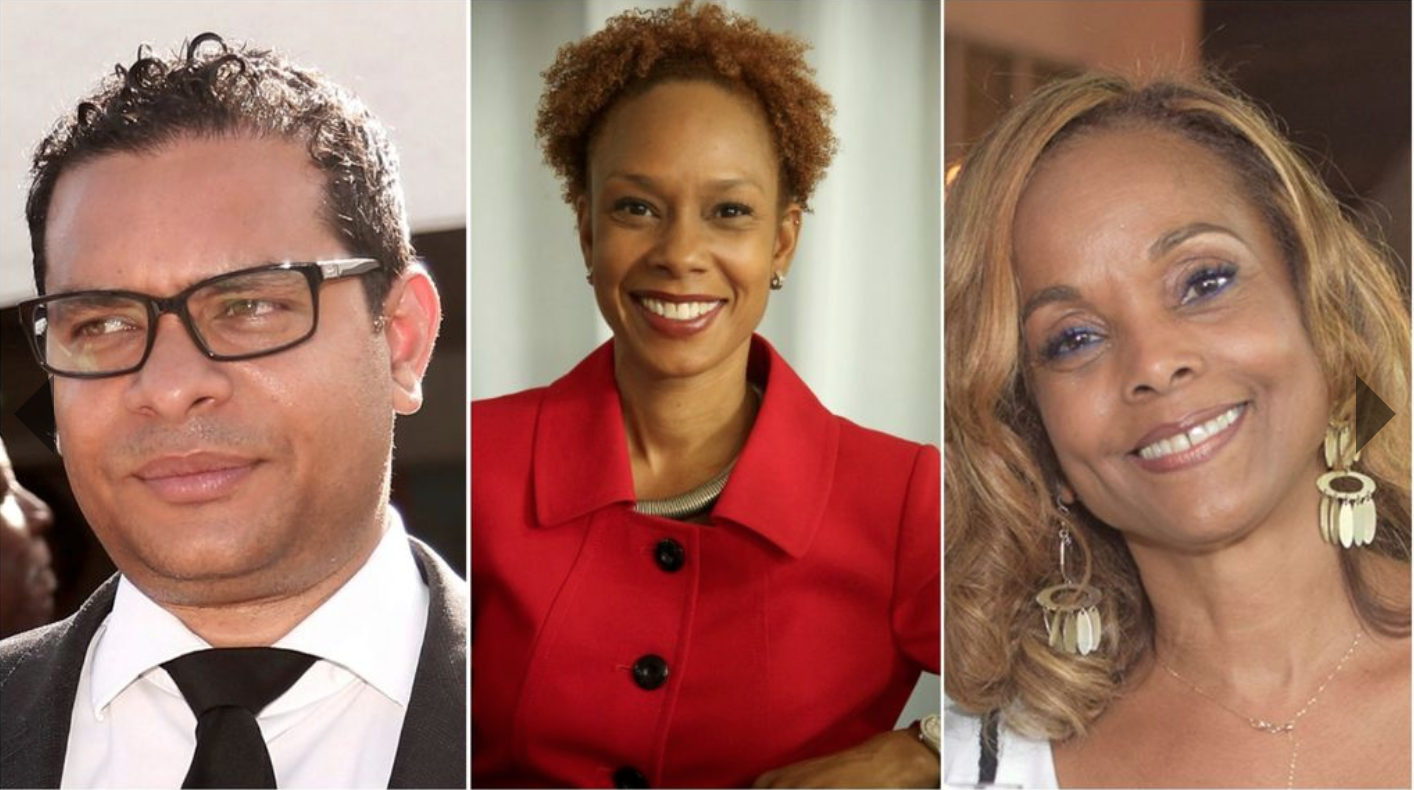
The matter preventing the completion of this liquidation is whether or not the board members should be remunerated for their service.  It is a reasonable expectation that service on a Board would attract some form of remuneration unless explicitly stated to the contrary.  At the last meeting with the liquidator in May 2019, the following statement: “… a total payment of more than a million dollars to seven Directors for Games which never came off is unconscionable…” raised the ire of the following members: Mrs. Dennise Demming, Dr. Iva Gloudon, Dr. Arthur Potts, Mr. David O Brien, Mr. Douglas Camacho and Mr. Mushtaque Mohammed.

For the record, under the leadership of former Minister of Health, Mr. Jerry Narace, Trinidad & Tobago created history by being the only country to cancel any activity because of the H1N1 scare and this cancellation occurred 6 weeks prior to the staging of the Games.  The board had been working diligently for the 30 months between their appointment and this cancellation.

The liquidator has the power to make a final determination but to take seven years to make that decision is unconscionable and unproductive.  Further, who is responsible at PwC to question why a simple voluntary liquidation should take almost seven years and counting.  If a reputable organization like PwC can’t get a simple voluntary liquidation completed in a reasonable time, then Trinidad & Tobago is doomed!

A Fractured Cabinet ..

The past few weeks have left me stunned by the antics of our leadership. Penny, Marlene, Burkee, Simonette, Espinet, Quamina … I can go on and on, but there is one common theme: they were headlined in the media because of some act of incompetence by the leadership of our country. This single-term government has stumbled from issue to issue, and every time I think it can’t get worse, something worse happens.

How can two government ministers sit in the same post-cabinet news conference and have a fundamental disagreement on any issue? In this case, the issue was the appointment of the CEO to manage Heritage Petroleum. One minister said that there will be a search for a replacement, while the other talked about allowing the CEO to operate remotely.

Photo: Former Heritage Petroleum CEO Mike Wylie (via Trinidad Guardian)

My conclusion from this public display is that the cabinet is so fractured that they can’t even keep ‘on message’ in the public. That says that the Ship of State is in the hands of a captain who is still clocking his hours to certification. We are in a danger zone and every decision taken will impact our quality of life for the next generation and beyond.

From the onset, the closure of Petrotrin and the establishment of the holding company was contentious. As a citizen, I saw another example of autocratic leadership and duplicity. The closure was presented as a fait accompli when a few months before, the headline was that the union and the management were working towards a way forward with the restructuring of Petrotrin.

We have squandered another opportunity to motivate our people to change our work ethic. If it was aimed at union-busting, then it failed. Unions are here to stay, so at all levels of our society, we have to find a way to work with unions or employee associations called by other names.

Heritage CEO, Mike Wylie, may have come in with the best intentions, but something went wrong with the process of selection. How thorough was the medical and why is compensation being considered when he is unable to function in the manner for which he was hired?

Former chairman Espinet has functioned as an effective hatchet man to transition Petrotrin into Trinidad Petroleum Holdings Limited (TPHL). Does anyone else wonder what happened for him to be removed so unceremoniously? Poor Quamina, a nice guy, a competent attorney, but an on-the-job-trainee (OJT) in the energy sector. So we stumble on.

Photo: Michael Quamina with Attorney General Faris Al-Rawi (via Trinidad Guardian)

In other countries, the population would be clamouring for transparency and accountability about these major decisions. There would be a loud demand for collaboration among cabinet colleagues instead of the public stumbling which occurred in the post-cabinet news conference. In looking at the board composition for these four companies, I also wonder out loud about the absence of women.

TPHL BOARD: Michael Quamina (Chairman), Reynold Adjodhasingh (Deputy), Newman George, Anthony Chan Tack, Joel Harding, Selwyn Lashley, Eustace Nancis.

HERITAGE BOARD: Michael Quamina (Chairman), Newman George (Deputy), Reynold Adjodhasingh, Selwyn Lashley, Joel Harding, Ryan Toby, George Leonard Lewis, Peter Clarke, Reeza Saleem.

PARIA BOARD: Newman George (Chairman), Eustance Nancis, Christine Sahadeo, Peter Clarke, Reeza Saleem.

GUARACARA BOARD: Newman George (Chairman), Anthony Chan Tack, Peter Clarke, Christine Sahadeo.

Are we so afraid to challenge that this travesty will be allowed to play out over the next 15 months to 7 September 2020?

Invasion of Privacy; Why release of alleged Justice Lucky recording should concern us all!

A feeling of fear covered me as I read a recent report of a recording of a private conversation allegedly between Justice Gillian Lucky and another person. I was further panicked because the Trinidad Expressnewspaper got hold of the tape, transcribed it and used it as a news story.

Where was the moment of pause to ask the question: is this the right thing to do? Is this the only way this story could be covered? Is it news at any cost? I know the answer will be that it was already out on social media, but does that make it right?

Photo: High Court Judge Gillian Lucky.

Shouldn’t there be some institution monitoring such releases or are we now in a free-for-all in which your conversations can be recorded without your knowledge or consent and used as someone else deems necessary? If you can tape the conversation of the judge and use it in this way, what will you do to an ordinary citizen?

Something is wrong with this scenario and it makes me feel that yet another of my freedoms is being violated. What will be next?

Facebook and other social media can operate according to the law of the jungle, but the state needs to play a role in protecting the rights of citizens. A huge deterrent to deviant behaviour is swift punishment. The source of the release of this recording should be swiftly tracked down and punished, if only for it to act as a deterrent to others who may feel it fair game to tape another’s conversation without their knowledge and use it without appropriate authority.

Every citizen should be afraid; not because big brother is listening, but because the systems which should be protecting our privacy do not exist or are being ignored. How is it that a private citizen’s phone call can be recorded, but we still have the police saying the hit was ordered from inside the prisons and they do not have the voice recording to be able to punish the perpetrator?

Is it that we are selectively targeting citizens? And if we are, should there be some publicised criteria so that citizens are aware of what will be flagged for recording by the state? How is it that someone who has the capacity to monitor and record the conversation of the judge can distribute the information with no penalty?

Photo: Tackling cybercrime…

The steps are small from state surveillance, to censorship, to harassment and indefinite detention (Bail Bill). The steps from citizen surveillance to blackmail are even smaller.

I am all in favour of using the best technology for our common good, but there has to be known guidelines and citizens must be aware of the boundaries. There must be standards and practices which are adhered to and punishments dispensed for breeches.

We need systems and processes to protect our privacy and a clear understanding of how to access these systems and processes.

People before bricks and mortar

Another Police Station has been commissioned, but crime and criminality continue to dig in.  In a year or so, the people of Carenage will have an improved structure and a few policemen will benefit from promotions or transfers, but what will be the impact on crime and lawlessness in the prime minister’s constituency, and indeed in the country?

The fact that he chose a police station instead of a secondary school signals to me that the prime minister’s focus is more on crime and punishment than on developing the human potential. Instead of awarding another multi-million dollar contract for the new police station the money could also have been invested in improving the training offered to the recruits to the police service.

Photo: Prime Minister Dr Keith Rowley is joined by Minister of National Security Stuart Young and Police Commissioner Gary Griffith at the Carenage Police Station Sod Turning Ceremony.
(Copyright opm.gov.tt)

It is a harsh reality that the police and the bandits are drawn from the same pool.  In order to change the mindset of the police, we have to train them differently. Anything less than a three-year training programme inclusive of isolation from their communities will have little meaningful impact on changing their work ethos and ethics.  Integration of police officers into their communities is absolutely beneficial, but it can only work when officers have been re-trained and understand their primary roles and responsibilities to the wider community.

The police officer of tomorrow will have to be trained to become critical thinkers skilled in communications and instilled with integrity, service and empathy. Training these values requires long-term intense exposure to achieve the human transformation that is necessary.

The Prime Minister could have also allocated our limited resources to replicating the successful Bishop Anstey High School East (BAHSE) and Trinity College East (TCE) experiment. These schools opened in 2001 as ‘model schools’ under the auspices of the Anglican Church.  After 10 years in existence there is a low transfer rate out and a high parental perception that these schools are schools of choice for their children.

The replication of such model schools in the western peninsula could provide an exceptional educational experience for hundreds of young people. If you improve the quality of the educational experience of 1,000 people annually, that is 1,000 fewer people annually with the potential to turn to crime.  When will we understand that developing people is more useful than bricks and mortar?

Photo: Schoolboy in class.

The Carenage police station brings to three the number of police stations being constructed in the north-west with Diamond Vale and Saint Clair under construction.  Adding a new police station will improve the person-to-police-station ratio even though our experience is that increasing the number of police stations has not reversed the scourge of crime.

There are already nine police stations in the greater Port of Spain area, roughly bounded by the Morne Coco Road, Saddle Road and Piccadilly Street, and each of them is within a two-mile (3.2km) walking distance from another station.  Carenage is surrounded by the Army and Coast Guard on one end and the Four Road Police and Western Police stations and could be well served if these were effectively managed.  In this ‘guava crop season’ when money is scarce, my choice would have been to invest my resources in a school for Carenage rather than build another structure which focusses on punishment and incarceration.

These are the nine police stations to which I am referring:

  • Belmont
  • Besson Street
  • Diamond Vale
  • Four Roads
  • Maraval
  • Police Headquarters
  • Saint Clair
  • Woodbrook
  • Western
Photo: Besson Street Police Station (Copyright Ministry of National Security)

This list does not even include Traffic Branch, Criminal Investigation Division and the Police Barracks.  The lesson in this for me is that if we continue to focus on the bricks and mortar and not the people, the epidemic of crime and criminality will intensify.

In the short term, law-abiding citizens will continue to be ‘sitting ducks’ for the bandits while guns, drugs and murders continue to dominate the headlines.  What is missing for me is any signal that there is a planned, centralized strategy aimed at changing the way we do things. Our future will only be different if we change the present and that requires the articulation and communication of the strategy for change.  The current method of repeating past strategies will not have any impact. When our focus moves from bricks and mortar to behaviour change, our society will change.

Demming: Until PNM and UNC unite on crime, we are all sitting ducks.

The societal breakdown around us is palpable.

Everywhere you turn there is chaos, indiscipline and manifestations of a society about to implode. Once you leave your home, your senses are assaulted by aggressive driving, loud music, lack of courtesy and piles of garbage. These assaults are carried out by people who are confident that there are no consequences for their actions so they continue to push the envelope.

Photo: A young man kisses a high powered weapon.

They have received the memo that if you kill your neighbour it will take 15 years for the matter to be called in the courts; that like Ish, Steve and Jack, if the courts have pronounced against you in a matter, you can use the bureaucracy to avoid any consequences; that if you commit a home invasion, by the time the police arrive you would have moved on to your next heist; that you can commit traffic violations like driving in reverse for more than 3 kilometres and despite the evidence being on camera, you will not be prosecuted; that as a doctor, you can carry out surgery on a person to remove cocaine from his stomach, not report it, and if you’re found out, and no one will hold you accountable.

This is not a list of hypothetical scenarios but rather realities which empower wrongdoers to operate with impunity. We know that there is no silver bullet solution to the scourge of criminality which is stalking our land, and solutions are complex, but citizens want to feel confident that somewhere it is being addressed.

In the 2015 election battle, both political parties used ‘solving crime’ as a key pillar in their manifestos.  The People’s Partnership manifesto made 59 references to crime and committed to preserving law and order.  The PNM talked about a new approach which would modernise and transform the Police Service and ultimately operationalise the Community Safety Partnerships (CSPs).

Since both parties had solutions in 2015, isn’t it logical for the Government and the Opposition to collaborate now to tackle our most intractable problem?

Photo: Then Prime Minister Kamla Persad-Bissessar (left) shakes hands with her successor, Dr Keith Rowley, en route to Nelson Mandela’s funeral in South Africa.
(Courtesy News.Gov.TT)

As the saying goes, “Pride goes before destruction, and a haughty spirit before a fall.”

If I were the Leader of the Opposition I would write to the Prime Minister offering to work with him on a crime plan. I would also provide a list of 7 subject matter experts who could operate on a bi-partisan basis to provide solutions. Then I would make this all public to be transparent and demonstrate that leaders can collaborate on critical issues.

Such an offer would be extremely difficult for the Prime Minister to reject and it will signal to the wider community that the Opposition is responsible and willing to act in the national interest.

In the absence of collaboration to solve crime, citizens will continue to operate in chaos and be happy that we survived another moment without being a victim. Living in fear and praying that you will not be the next victim is unacceptable and inhumane.

We deserve better than this.

Peddle Hope Not Despair!

Sometimes a song, phrase or expression lodges itself in your mind as if on repeat play.  The one that is in my mind is the recent statement by former CEO of SWMCOL, Ronald Roach which was reported in the Trinidad Guardian on July 7: “We have not placed suf­fi­cient em­pha­sis on waste dis­pos­al. Our waste dis­pos­al meth­ods are very prim­i­tive and it has been so for a long time. I have been try­ing to change that. There is so much that needs to be done. We don’t get it as a coun­try. We don’t get it as a peo­ple.”

He was referring to “waste disposal” but I can replace “waste disposal” with “tourism sector”, “crime”, “education”, “sexual harassment” etc and the same sentiment will be valid.  We are at a place where the tourism sector has crashed; we can’t even afford to paint the white lines on our rapidly deteriorating roads; crime is out of control; 80% of students are unhappy their SEA placing; the Prime Minister continues to keep from the public the details of a report on how a sexual harassment charge about a Minister was handled and I can go on and on.

For the past 45 months we have been bombarded with the propaganda that there is not enough of anything; from money to pay public servants to hospital beds for the sick but the huge capital expenditure projects continue to be implemented.  There seems to be an insatiable appetite for building buildings and soon the road paving frenzy will unfold.

When households experience a money crunch, we do things like: repair and refurbish our furniture; spend only on what is essential; gather around the kitchen table and talk about how we are going to get out of this difficult space.  We hug each other and provide the reassurance that tomorrow will be a brighter day. In other words we take the necessary action and provide the inspiration, emotional support and hope.

It is no different for a country.  Our leader should be explaining that while our world has changed permanently we are creating a new and different space for Trinidad and Tobago.  He should be appealing to our aspirational selves and helping all of us believe that things can and will be better if we collaborate and take action to make our lives better.

Our leader could have identified three actions which citizens can take to make a difference.  Our leader could be peddling hope instead of wasting precious communication time either cussing the opposition, defending a poor decision or lamenting that we have no money while finding money to allocate to a commission of enquiry which is unlikely to finish in the remaining 15 months.

The author Tom Bodett said “a person needs just three things to be truly happy in this world: someone to love, something to do and something to hope for.”  My Prime Minister has a responsibility to provide our country with something to hope for.

Tourism Flounders

The recent termination of the CEO of Tourism Trinidad Limited is indicative of a wider systemic failure being experienced in every institution in the country.  It brings into focus the unreadiness of this current administration to do the job for which they applied. Under the stewardship of Dr. Rowley, we have burned down former TDC, created 2 new companies and the tourist arrivals continue on a downward spiral.  After 45 months, the decline in arrivals has not even levelled off while arrivals in the region move in the opposite direction.

The Minister, The Fired CEO and the Fearless Chair of Trinidad Tourism Ltd

Who will have the confidence to take on the responsibility of leading a company in which the Chairman fired her selection for CEO after 6 months; the Minister is “awaiting information” and leaked Board papers suggest that the CEO acted on her own volition and there is infighting amongst board members?

Clear, strong strategic direction must be taken immediately to begin the process of stabilizing the Tourism sector.  There are no quick fixes for the systemic failure of tourism in Trinidad and Tobago and whatever is done now needs a 6 – 9 month period before any results are seen.  In the short term whomever is left on the Board should urgently recommend the implementation of the Trinidad Tourism Sector Development Tourism Road Map 2016-2020 – Policy Proposal.  This will be a short-term measure while the Tourism Master Plan of 1995 is upgraded and modernized in keeping with current day trends.

A second action which can be taken is to appoint an interim action team comprising representatives from the tourism stakeholders to implement the top 5 priority actions which might stabilize the Sector.  These persons should be on short term contract and be given KPIs and deliverables tied to their remuneration.

Simultaneously, it is necessary to continue to build the new TTL according to its mandate and byelaws.  I disagreed with the closure of former TDC because the closure strategy has failed time and again in Trinidad and Tobago.  What is needed is transformative change to fix our institutions and for the Politicians to STOP trying to use State Enterprises and other Institutions to advance their myopic political agenda.

The Tourism Sector will not thrive under a heavy-handed government either PNM or UNC.   As visitors move along the tourism value chain, they interact with almost all sectors of the society and their experience is directly impacted by all sectors. For Tourism to work there must be complete collaboration –   from entry systems at the ports of entry to every other point of hand-off until the visitor leaves the country or moves on to the next destination. If people understood the direct relationship between their income and the product or service they offer, they would be energized to give of their best but nobody is explaining that to the Immigration Officer, the Taxi Driver, the Tour Guide etc. 

The current situation is that the Sector is in shambles and there are small and medium sized businesses which continue to suffer daily.  They are the ones who must demand clear, decisive actions because they stand to lose the most. Like many other things in this country, the sector is “fixable” but it requires leadership which is even-handed and focussed on a long term result.  We cannot continue to look at the election cycle because that is what has caused the perpetual mis-management, waste and corruption. For our nation to thrive we must be looking at a 50-to-100 year strategy which will build institutions which are robust and able to withstand the vagaries of modern day living.

The World Tourism Organisation projects international tourist arrivals to the Caribbean to increase by 2.2% a year to 25 million in 2020.  Trinidad and Tobago must carve out the section of that growth we are going after and place a laser like focus on how we are going to get the market share.  Without a clearly articulated vision, we are guaranteed to get to continue along this current path to underdevelopment.

Why we can’t get foreign exchange?

The allocation of foreign exchange to Jane and Beharry Public continues to be inequitable and discriminatory. The ordinary citizen cannot get foreign exchange but franchises keep popping up all over the place. Clearly if you operate in the right circles you can get foreign exchange at will.

Who needs another Starbucks, Chucky Cheese, Wendy’s, Porche dealership etc? Why are we importing dried mangoes from Thailand instead of encouraging local entrepreneurship?

Photo: Starbucks is believed to be thriving in Trinidad

I recall that the Couva Children’s Hospital was supposed to bring in foreign currency by attending to patients from other countries but it remains closed. These are just mundane, everyday examples of how our foreign exchange is being mis-allocated.

I came across three cases of citizens who are angry because they cannot get foreign exchange to carry on with their lives.

Case One is of a returning resident who sold his property in England, brought the funds to Trinidad and built a home with the intention of retiring.  After 10 years he is so disenchanted that he wants to move on, but cannot get access to the money after selling his newly built house. He is now stuck in a place with money which he can only spend locally.

Case Two is a woman who has been living abroad for 15 years and has been investing in financial instruments which have matured; and she cannot get the funds out of the country now to continue her life abroad.

Case Three is of another woman who emigrated 20 years ago and cannot get access to her retirement lump-sum or monthly pension.

I have had the humiliating experience of having to line up daily to get US$100 in order to carry out some random transactions. Something is terribly wrong with the system. It appears to favour those with contact and access.

Photo: Trinidad and Tobago is feeling a foreign exchange crunch.

Is the reason that the ordinary citizen is experiencing these problems rooted in our corrupt systems, which are based on who you know and not what is the right thing to do?

The population understands that the energy sector has contracted resulting in a reduction in foreign exchange inflows. We also understand that very little has been done to diversify the economy to make up the shortfall, despite decades of experts telling us that we need to diversify the economy. What is clear is that citizens without contact or friends in the right places will continue to feel the pinch.

So if your son, daughter, tanty, etc, ‘in foreign’ need some help, you can’t offer it because you can’t get the foreign exchange to send. For the hundreds of thousands of Trinidadians who have migrated but have funds in Trinidad from pension plans or other instruments, that money remains unavailable, locked away from their access.

This is simply inequitable, unjust and unfair. Additionally, it does not inspire confidence that the system will work in your favour at all times.

Governments must inspire confidence in people by operating even-handedly and transparently so please let us know who are the users and recipients of this scarce resource.

Photo: Finance Minister Colm Imbert.

Against every wrong!

The Jawala Rambarran / Colm Imbert debacle is not new.  It is alleged that the goodly Minister prevented the employment of former Central Bank Governor at the G-24 Secretariat.  I am aware of several careers which have been halted by the political attitude that if you dare object to what I am doing or support the opposition you will “eat grass”.  Both the PNM and UNC (and/or its derivatives) are guilty of destroying careers and lives simply because they perceived that their opponents held a different view or objected to action.  Our society will not progress under the leadership of persons who are so vindictive and short-sighted. It is beyond my comprehension that a Minister can allocate some of his time to preventing a person from being employed or being awarded a contract.  

In this winner-take-all political system, people are justifiably afraid of being victimized.  I have seen how the winner-take-all political system extends way beyond the seats in Parliament.  Indeed it impacts the day to day running of the country. It translates into policy decisions about where a highway or houses should be built or if a project should be halted or if approval should be granted for a development being sponsored by a political financier.  Unfortunately we have bastardized our political system to the extent that this winner-take-all attitude is setting us up for conflict.

In an ideal world, it should not matter who is in control, all action should be in the best interest of the citizenry and there should be such a planned approach to development that “John Beharry Public” is the winner.  The ideal world should prescribe that the state boards be appointed on the basis of competence and therefore are not affected by a change of political parties. In the ideal world, politics will be de-linked from infrastructural development and plans would not be derailed simply because the new Minister does not agree, or that he does not like the incumbent, or has a friend who is expected to be the beneficiary of a particular contract.  The development of the country should be a planned, sustained effort aimed at providing the best quality both in terms of outcomes and procedures.

Both political parties mouth some version of having a meritocracy and focussing on the citizens but their talk is not substantiated by their actions.  We continue to hear wild promises but see focussed action directed towards benefitting their inner circle of friends and financiers. They do not even have the courage to call out wrong doings.

Our country is at a significant crossroad where we need a breath of fresh air and a new kind of change.  What is needed is a cadre leaders who are mature and have the tenacity to do the right thing because it is the right thing to do. The challenge we face is that we know that the political system is broken and the leadership of both parties is without vision or empathy so we are back to “who we go put”.  

This is a time for patriots to stand up to tyranny and wrongdoing.  We cannot continue to pay lip service to the phrases about taking back our country.  We have to stand up to every wrong that is presented.

Minister Imbert’s arrogance!

Finance Minister, Engineer Colm Imbert has once again demonstrated an attitude of arrogance when he tried to call out the Regional President of BPtt and almost with scorn said she relied on technocrats for advice as if that was a problem.  Last time I checked, BPtt is a successful global organization managing a budget that is significantly larger than the national budget of Trinidad and Tobago. Maybe their success is because of their understanding of the value of collaboration and the importance of relying on technocrats and subject matter experts for advice.  Maybe our failure as a nation is because we ignore the technocrats and rely on politicians like the current Minister of Finance who has no track record in Finance.

The Minister’s intemperance in referring to BPtt’s action is almost as bad as Roget’s infamous “take your platform and go”.  I guarantee you that the decision to “pause” was not made singly by this Australian Accountant. It would have had major direction from BPtt’s global team.  To add insult to injury, the “Engineer Finance Minister” referred to other operators in the market including Shell, EOG and BHP Billiton. I wonder what is he channelling!

A day later the “Engineer Finance Minister” attempted to explain that he simply meant to convey that “like any person without discipline-specific expertise, will need to rely on expert technical advice to arrive at an informed decision.”  This was a good comeback but an oversized shoe is already in his mouth. I looked at the presentation in Parliament and made the following observations:

Firstly,  the “Engineer Finance Minister” does not understand that organizations like BPtt are designed for seamless transition at the head.  His comment that a lot is happening at BP is instructive. It reflects the approach used by our “Engineer Finance Minister” during the transition from the People’s Partnership to the PNM.  Put everything on pause until I understand what is happening here.

He commented that Mrs. Fitzpatrick is neither a geologist nor a petroleum engineer but merely an accountant so in deciding to press “pause” she had to rely on advice.  In his subsequent explanation of what he meant, he talked about the importance of being advised. I wonder what happened to the advice given by the now defunct Economic Development Advisory Board (EDAB) which he preferred to dissolve rather than take their advice.

My third observation is about the tone and I wonder if the head was a Mr. Fitzpatrick instead of woman, if he would have been so caustic in his remarks.  Trinidad and Tobago would be well served if Mr. Imbert apologizes to the head of BPtt for any unintended conclusions which  his intemperance may have conveyed.