Pedestrians are not the root of the road death problem

In his letter to the editor, Mr Ballantyne is right that road deaths demand urgent action, but his focus on pedestrian behaviour puts the cart before the horse.

Pedestrians do take risks, and education has a role. People cross where they do because of the environment we have built for them. Over the years, crossings have been removed from many roads, leaving walkers with long detours or no safe option at all. Walkovers are of little use to the elderly, people with disabilities, parents with small children, or anyone facing a long climb in the heat. When the safe route is inconvenient or missing, people take the shortest one. That is predictable human behaviour, not simply a cultural failing. Charging pedestrians for crossing where we have taken away the crossings punishes them for our own infrastructure failures.

The greater problem is driver behaviour. Every time I drive, I see motorists ignore the rules at crossings, use their phones at the wheel and fail to give way to walkers and runners. Heavier vehicles demand even more care. Until drivers follow the rules, enforcement is visible and consistent, and penalties are certain. No pedestrian awareness campaign will bring down the fatality figures.
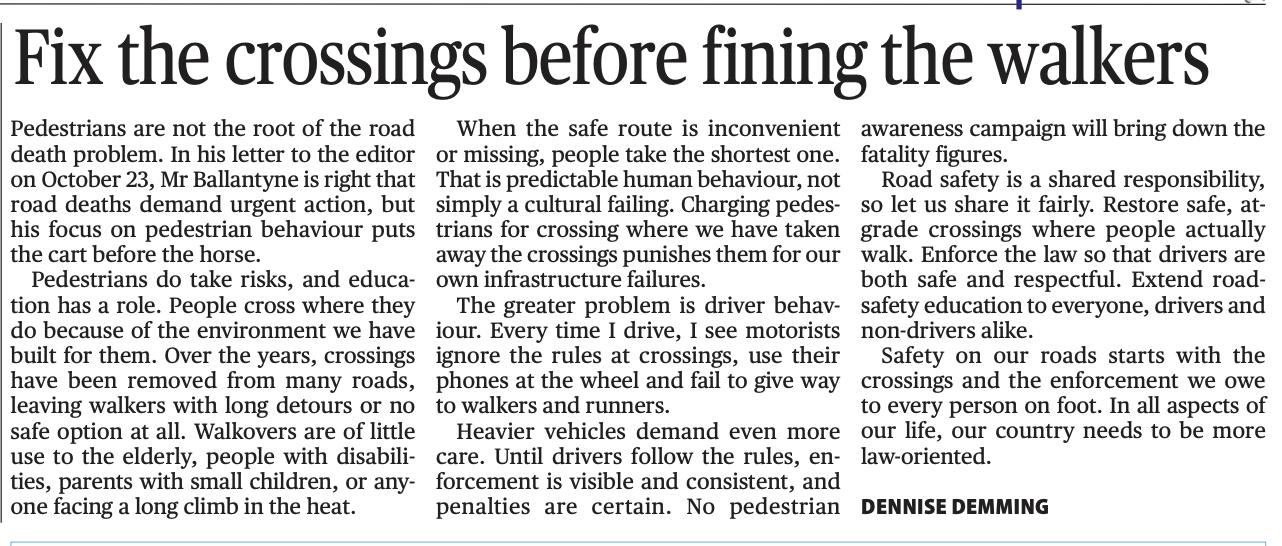
Road safety is a shared responsibility, so let us share it fairly. Restore safe, at-grade crossings where people actually walk. Enforce the law so that drivers are both safe and respectful. Extend road-safety education to everyone, drivers and non-drivers alike.

Safety on our roads starts with the crossings and the enforcement we owe to every person on foot. In all aspects of our life, our country needs to be more law-oriented.
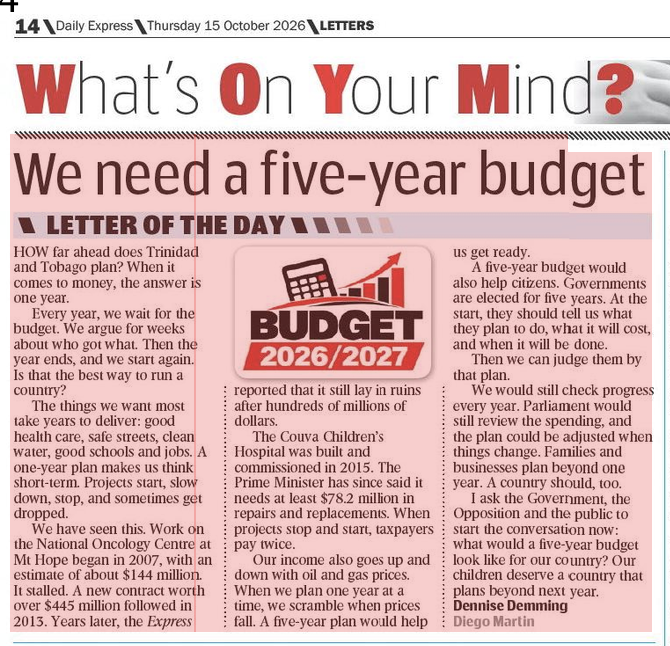
T&T needs a five-year budget …

How far ahead does Trinidad and Tobago plan? When it comes to money, the answer is one year.

Every year, we wait for the budget. We argue for weeks about who got what. Then the year ends, and we start again. Is that the best way to run a country?

The things we want most take years to deliver: good health care, safe streets, clean water, good schools and jobs. A one-year plan makes us think short-term. Projects start, slow down, stop, and sometimes get dropped.

We have seen this. Work on the National Oncology Centre at Mt Hope began in 2007, with an estimate of about $144 million. It stalled. A new contract worth over $445 million followed in 2013. Years later, the Express reported that it still lay in ruins after hundreds of millions of dollars.

The Couva Children’s Hospital was built and commissioned in 2015. The Prime Minister has since said it needs at least $78.2 million in repairs and replacements. When projects stop and start, taxpayers pay twice.

Our income also goes up and down with oil and gas prices. When we plan one year at a time, we scramble when prices fall. A five-year plan would help us get ready.

A five-year budget would also help citizens. Governments are elected for five years. At the start, they should tell us what they plan to do, what it will cost, and when it will be done.

Then we can judge them by that plan.

We would still check progress every year. Parliament would still review the spending, and the plan could be adjusted when things change. Families and businesses plan beyond one year. A country should, too.

I ask the Government, the Opposition and the public to start the conversation now: what would a five-year budget look like for our country? Our children deserve a country that plans beyond next year.